
Roof Tile Battens: Signs They’re Failing and What Replacement Costs in Sheffield
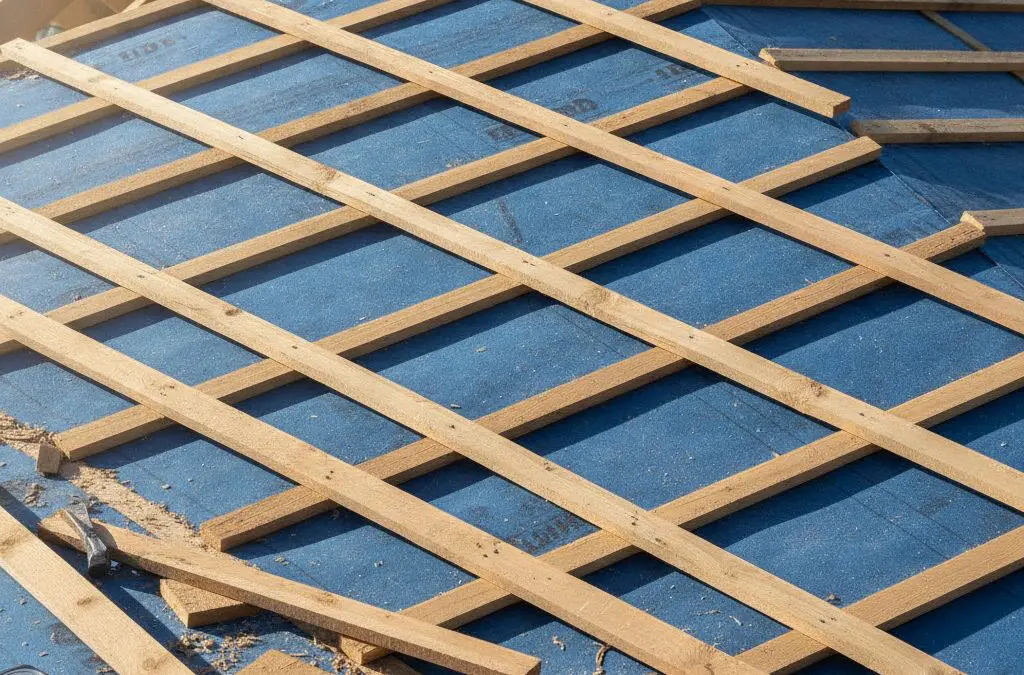
Roof tile battens are the horizontal timber strips fixed across your roof rafters that the tiles hang from. They work quietly in the background, holding every tile in place and creating the drainage channel that carries rainwater down to the gutters. When they fail, the consequences can range from a few slipped tiles to a full-scale re-roof — which is why understanding the warning signs matters.
This guide covers what battens do, the signs they are deteriorating, and what replacement costs in Sheffield and South Yorkshire.
What Are Roof Tile Battens?
A roof batten (also called a tiling batten or roofing lath) is a treated softwood strip, typically 25mm × 38mm or 25mm × 50mm, fixed horizontally across the roof rafters at regular intervals. The spacing between battens is determined by the tile gauge — how far each tile overlaps the one below it. For a standard interlocking concrete tile, batten spacing is typically 280–310mm; for traditional plain tiles it is around 100mm.
Every roof tile or slate hooks over or sits on a batten. The battens transfer the weight of the tiles to the rafters, and the gap between the batten and the roofing felt beneath creates a ventilation and drainage channel. Without intact battens, tiles cannot be held securely and water has no clear drainage route.
What Sits Above and Below the Battens?
Below the battens sits the roofing underlay (often called sarking felt or breather membrane). Above the battens sit the tiles or slates. The underlay is the secondary waterproof layer — it catches any water that gets past the tiles and redirects it to the gutters. Battens that have rotted usually mean the underlay below them has also failed, since the two deteriorate together when water gets in.
Signs Your Roof Tile Battens Are Failing
Batten failure is rarely a sudden event. It develops gradually, and the warning signs are often visible from the ground or from inside the loft.
From Outside
- Multiple slipped or lifted tiles — one slipped tile is usually wind or impact damage; several slipping tiles in a row suggest the batten beneath has rotted and can no longer grip the tile nibs
- Tiles sitting at an angle — a healthy roof has uniform tile alignment; if tiles are tilting or sagging in patches, the batten below them may have deflected or split
- Unusual moss growth patterns — moss grows fastest where moisture is retained; thick moss along horizontal lines that correspond to batten positions can indicate moisture trapped against degrading timber
- Valleys or dips in the roof plane — visible from the ground at the right angle, sagging between rafters can indicate rafter or batten problems
From Inside the Loft
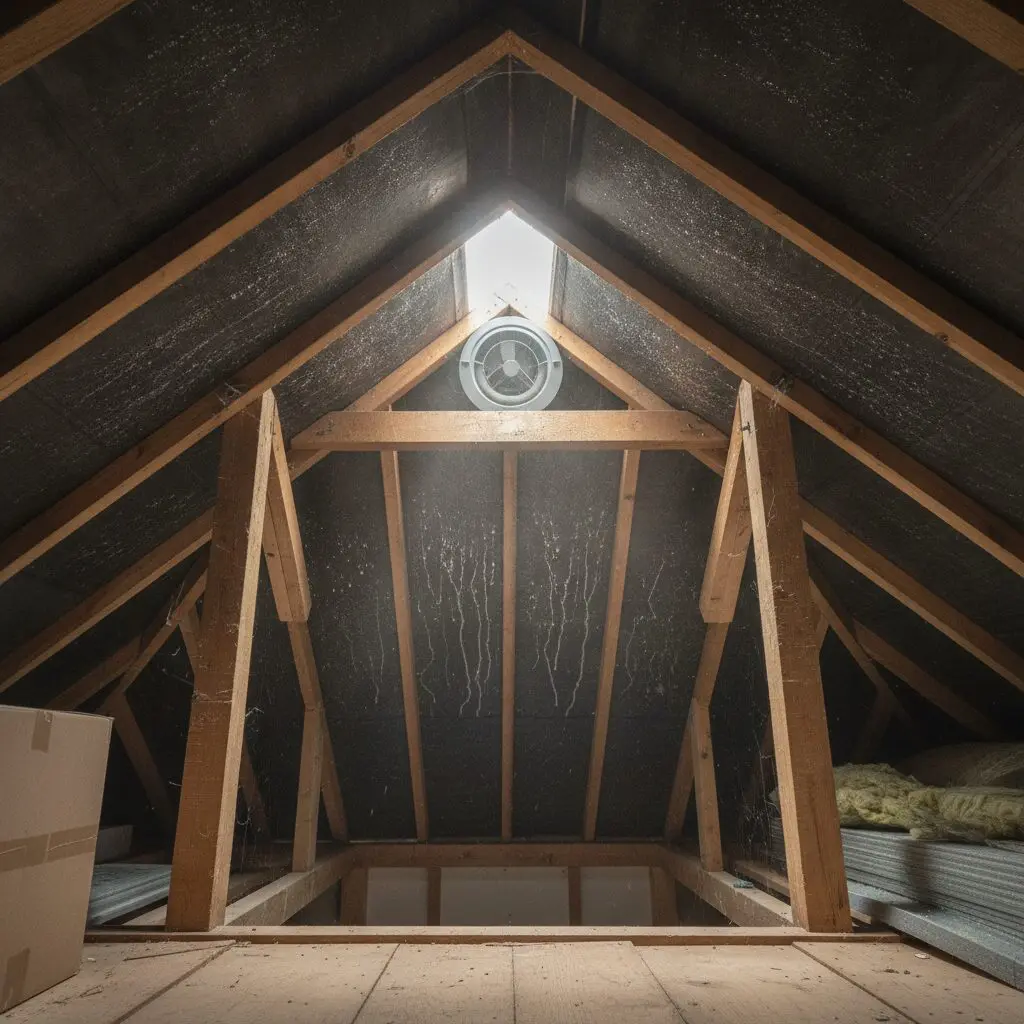
- Daylight visible through the roof — if you can see pinpricks of light through the felt and tiles from inside the loft, tiles have slipped and the battens may have failed
- Staining or damp patches on felt — watermarks on the underside of the felt indicate past or current leaks; check whether the staining is active
- Rotten or discoloured timber — battens visible from the loft hatch that appear dark, soft, or crumbling need professional assessment
- A springy or bouncy feel underfoot — if you can safely access the loft and the roof structure feels soft or gives slightly under pressure, the timber is compromised
How Long Do Roof Battens Last?
Modern pressure-treated softwood battens are graded to BS 5534 and should last 40–60 years in normal conditions. Older roofs (pre-1980s) may have untreated battens that have a much shorter effective lifespan — many are already at or past the end of their useful life.
Several factors accelerate batten deterioration:
- Failed underlay — if the roofing felt has perished and is no longer shedding water correctly, moisture sits against the battens and accelerates rot
- Poor ventilation — a roof with insufficient ridge and eaves ventilation traps warm moist air against the timber
- Persistent moss and lichen — heavy moss cover retains moisture and causes accelerated decay at the batten level
- Previous water ingress — a chimney or flashing leak that was left too long can saturate batten sections well beyond the visible wet patch
On a Sheffield roof built in the 1950s–1970s — a very common era for the city’s housing stock — battens may be 50–70 years old. If a significant section is showing signs of deterioration, replacement is typically the right recommendation.
What Does Roof Tile Batten Replacement Involve?
Because battens sit under the tiles, replacing them requires removing all tiles from the affected section of roof. In most cases, batten replacement is combined with underlay replacement, since the felt usually needs replacing at the same time. This makes it a significant project — effectively a partial or full re-roof.
The process typically involves:
- Erecting scaffold or access towers for safe working at height
- Carefully removing all tiles, stacking them for inspection and reuse where possible
- Stripping out old underlay and battens
- Inspecting rafters for damage; replacing any rotten or split rafter timbers
- Installing new breathable roofing membrane (modern alternative to traditional felt)
- Fixing new treated tiling battens to BS 5534 at the correct gauge for the tile type
- Re-laying the original tiles where sound, replacing broken or cracked ones
- Refitting flashings, ridge tiles, and verge details
If the original tiles are in good condition, they can often be reused — which reduces material costs significantly. If the tiles are also near end of life, this is a good opportunity to upgrade to a newer tile profile with better weathering characteristics.
Roof Tile Batten Replacement Cost in Sheffield
Because batten replacement involves removing and relaying the entire roof covering, costs are substantial. The figures below are typical for Sheffield and South Yorkshire in 2026:
| Property Type | Typical Cost (battens + felt + relaying existing tiles) |
|---|---|
| End-terrace (one slope) | £3,500–£6,000 |
| Semi-detached (front + back) | £6,000–£10,000 |
| Detached (4 slopes) | £9,000–£16,000 |
These figures assume existing tiles are reusable. If the tiles need replacing alongside the battens, add £2,000–£5,000 depending on tile type and roof area. Scaffold, skip hire, and VAT are included in the ranges above.
If tiles are in good condition, reusing them significantly reduces cost. We inspect each tile as it comes off and replace only those that are cracked or badly weathered.
If tiles are also near end of life, combining a full tile replacement with batten and felt replacement at the same time is far more economical than two separate visits.
If you have noticed slipping tiles or suspect your battens may be failing, the best first step is a professional inspection. We can lift a section of tiles to check batten condition and give you a clear picture of what is needed before committing to any work.
AJR Roofing covers Sheffield and surrounding South Yorkshire including Rotherham, Barnsley, Doncaster, and Chesterfield. Contact us for a free inspection and written quote.
Get a free quote
Frequently Asked Questions
Can just a section of battens be replaced without doing the whole roof?
Yes, in some cases. If the deterioration is localised to one section or one slope, we can strip and reback that area without touching the rest. This is most viable when the failure is linked to a specific leak source that has since been repaired.
Should I replace my tiles at the same time as the battens?
It depends on tile condition. We inspect all tiles as they come off and advise honestly — replacing tiles that still have 20+ years of life left is unnecessary expenditure. Replacing tiles that are also near end of life at the same time is almost always more economical than a second full strip-off within 10 years.
How do I know if my underlay needs replacing too?
In most batten replacement projects, the underlay is replaced at the same time because access is already open. Old bitumen felt is often brittle and perished by the time battens need replacing — fitting new battens over failed felt makes little sense. Modern breathable membranes also outperform old felt significantly.
What is the BS 5534 standard for roof battens?
BS 5534 is the British Standard for slating and tiling. It specifies minimum timber quality, treatment requirements, and batten sizing for different tile weights and rafter spans. All battens we use comply with this standard and are pressure treated to Use Class 2 or above for protection against decay.
How long will new roof battens last?
Modern pressure-treated battens installed to BS 5534 should last 40–60 years under normal conditions. Combined with a quality breathable membrane and good ridge and eaves ventilation, a properly done re-roof should not need significant structural attention for several decades.