
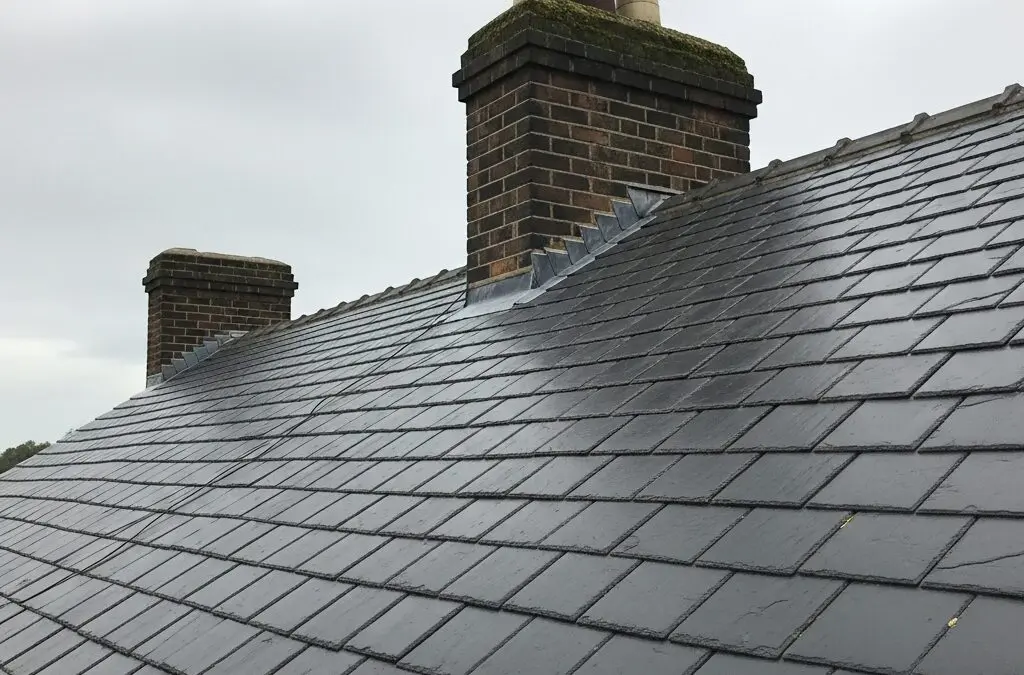
Slate Roof Replacement in Sheffield: Natural vs Reclaimed Slate, Costs & What to Expect
By AJR Roofing | Published 29 September 2026 | Updated 29 September 2026
Walk down almost any Victorian or Edwardian street in Sheffield — Nether Edge, Broomhill, Walkley, Meersbrook — and you’ll see slate roofs. Many of those roofs are original, which tells you something important about how long good slate actually lasts. But eventually even the best slate roof reaches the point where the fixings fail, the slates themselves begin to delaminate, or water starts getting through in multiple places. When that happens, replacement is the right call — and the choice between natural and reclaimed slate is where many Sheffield homeowners get stuck.
Why Slate Is So Common on Sheffield Roofs
Sheffield’s older housing stock — the terraces, semis, and Victorian villas that make up large parts of S7, S10, and S11 — was built when natural Welsh slate was the roofing material of choice across northern England. It was durable, it was waterproof, and it was available in large quantities from the Welsh quarries supplying the country’s rapid Victorian-era building programme.
That legacy means a significant proportion of Sheffield’s pre-1940 housing still carries its original slate, or at least a mix of original and patched slate from repairs over the decades. When we go out to quote a roof replacement in Nether Edge or Walkley, slate is the dominant material we see — and when it needs replacing, getting it right matters as much for the character of the neighbourhood as for the performance of the roof.

Natural vs Reclaimed Slate: The Key Differences
This is the decision most Sheffield homeowners face when planning a full slate replacement. Both are genuine natural slate — the difference is where it came from and how it’s been processed.
Cut from active quarries in Wales, Spain, or Brazil. Consistent size, thickness, and quality. Long, predictable lifespan. Consistent colour and texture throughout. Easier to source in quantity. The right choice for most full replacements on non-listed properties.
Recovered from demolished or re-roofed buildings, most often Victorian Welsh slate. Can be an exact match for period properties in conservation areas. Supply varies; good-quality reclaimed Welsh slate can cost more per slate than new Spanish alternatives and takes longer to source.
The practical difference comes down to the property. For a Victorian terrace in a Sheffield conservation area where the existing slates have a particular texture and patina that needs to match, reclaimed Welsh slate is often the right call — even if it costs more to source. For a non-listed property replacing a failed roof with modern slate, new Spanish or Welsh slate offers a longer, more predictable lifespan at a more accessible price point.
How Long Does a Slate Roof Last?
A well-maintained natural slate roof can last between 75 and 150 years — and in some cases significantly longer. Welsh slate, the premium option, routinely lasts 100–150 years. Spanish and Brazilian slates, which became the standard lower-cost alternative through the 1990s and 2000s, typically last 60–100 years depending on grade.
The catch is that the fixings — the nails holding slates to the battens — often fail before the slate itself does. Steel nails typically last 60–80 years, and when they corrode through, slates start slipping even when the slate itself is still perfectly sound. According to BestBuilders.co.uk’s 2026 UK slate roof guide, Welsh slate lasts 100–150 years while Spanish premium slate lasts 80–100 years — with the fixings typically dictating the actual replacement schedule rather than the slate material itself.
A skilled roofer can assess this on a visual inspection: slipped, cracked, and missing slates concentrated in the same areas usually indicate nail failure rather than slate failure. If the slates themselves are still sound, a re-nail and re-lay can avoid a full replacement.
Slate Roof Replacement Costs in Sheffield (2026)
Slate is one of the more expensive roofing materials — but given the lifespan, it’s often the most cost-effective over the life of the roof. These figures cover a full strip-and-relay on a typical Sheffield terraced or semi-detached house:
| Slate Type | Installed Cost (per m²) | Typical Full Roof (60–80m²) |
|---|---|---|
| New Spanish slate | £70–£100 | £4,200–£8,000 |
| New Welsh slate | £100–£140 | £6,000–£11,200 |
| Reclaimed Welsh slate | £110–£160 | £6,600–£12,800 |
These costs assume stripping the existing covering, installing new battens and underlay, and full re-laying. They don’t include scaffolding (typically £800–£1,500 for a standard two-storey), chimney work, or flashing replacement — both of which are often needed on older Sheffield properties at the same time as a roof replacement.
For a full overview of pitched roof replacement costs and services, see our new pitched roofs page.

Conservation Areas, Planning Permission and Slate in Sheffield
Sheffield has 38 conservation areas, and across many of them — particularly in Nether Edge, Ranmoor, Broomhill, Meersbrook, and the Victorian suburbs to the south-west — natural slate is the specified roofing material. Sheffield City Council specifically identifies natural slate as a traditional feature in these areas that should be preserved. If your property is in a conservation area, the starting assumption is that any full replacement must use like-for-like slate, matching the size, texture, and colour of the original covering.
Some conservation areas in Sheffield are also covered by Article 4 Directions, which remove permitted development rights for external alterations. Under Article 4, replacing a natural slate roof with concrete tile — even where you’d otherwise have permitted development rights — requires full planning permission. Nether Edge and Broomhill are among the Sheffield conservation areas subject to Article 4 Directions covering roof alterations.
The practical upshot: if you’re in one of Sheffield’s conservation areas and want to replace a slate roof with a different material, expect to need planning permission — and expect it to face significant scrutiny. A good Sheffield roofer will tell you this upfront and help you source the right slate to satisfy planning requirements. For a fuller guide to what requires permission, read our post on planning permission for roof repairs in Sheffield.
Signs Your Slate Roof Needs Replacing
Not every failing slate roof needs full replacement. But these signs point clearly to a strip-and-relay rather than targeted repairs:
- Multiple slipped or missing slates in the same area — this is nail failure, not isolated damage. Patching is a temporary fix that doesn’t solve the underlying problem.
- Slate delamination — the slate itself splitting into layers and crumbling, often along exposed ridges or in areas prone to water pooling.
- Widespread moss and lichen growth — indicates long-term moisture retention, which accelerates both slate and fixing deterioration.
- Active leaks through multiple points — when water is getting in at more than one or two locations, targeted repairs stop making economic sense.
- Roof age approaching 80–100 years without a full replacement — on original Victorian slate, fixings are likely at or past the end of their expected service life even if the roof looks sound from the ground.
Frequently Asked Questions
How much does slate roof replacement cost in Sheffield?
A full slate roof replacement on a typical Sheffield terraced or semi typically costs £4,200–£12,800 depending on the slate type chosen, roof size, and complexity. New Spanish slate is the most affordable; reclaimed Welsh slate — often required for conservation area properties — sits at the higher end. Scaffolding, chimney work, and new flashings add to this if needed.
What is the difference between natural and reclaimed slate?
Natural slate is newly quarried, offering consistent size, quality, and a long lifespan. Reclaimed slate is salvaged from other buildings — it’s often the right choice for period properties in conservation areas where matching the original material matters, but quality varies and good-quality reclaimed Welsh slate can be harder to source than new alternatives.
Do I need planning permission to replace a slate roof in Sheffield?
Like-for-like slate replacement generally doesn’t require planning permission as permitted development. However, in Sheffield’s 38 conservation areas — including Nether Edge, Ranmoor, and Broomhill — changing the roofing material requires full planning permission, and Article 4 Directions in some areas mean even like-for-like changes need approval. Always check with a local roofer or Sheffield City Council before starting work on a conservation area property.
How long does a new slate roof last in the UK?
Welsh slate typically lasts 100–150 years; Spanish and Brazilian slate 60–100 years. In most cases the fixings (nails) fail before the slate itself, typically after 60–80 years. A roofer can assess whether slipping slates indicate nail failure (fixings need replacing, slates may be reusable) or slate failure (full replacement needed).