
Dormer Loft Conversion Roofwork in Sheffield: Flat vs Pitched, Materials and What to Expect
By AJR Roofing | Published 22 September 2026 | Updated 22 September 2026
Dormer loft conversions add headroom, light, and usable space to homes across Sheffield — and in a city full of Victorian terraces and Edwardian semis, they’re one of the most popular ways to grow without moving. What most homeowners don’t realise until the project starts is just how much of a dormer conversion falls to the roofer. A significant portion of the work — and one of the most failure-prone elements — is the roofwork itself. Get that wrong and you’ll be chasing moisture problems in your new loft room for years.
Flat vs Pitched Dormer Roofs: Which Suits Your Sheffield Home?
The two main dormer styles you’ll encounter in Sheffield are flat-roofed box dormers and pitched-roof dormers. They look different, they serve different purposes, and they suit different properties.
The most common type. A box-shaped addition with vertical walls and a flat roof surface. Maximises internal headroom and floor area — ideal for rear dormers on terraces and semis.
Features a small angled roof matching the existing pitch. Preferred for front-facing dormers, conservation areas, or where planning requires the addition to follow the original roofline.
For most Sheffield homeowners adding a rear dormer to a terraced or semi-detached property, a flat-roofed box dormer is the more practical and cost-effective choice — it maximises the usable space you gain from the conversion. Pitched dormers are more common on front elevations or in areas with stricter planning rules.
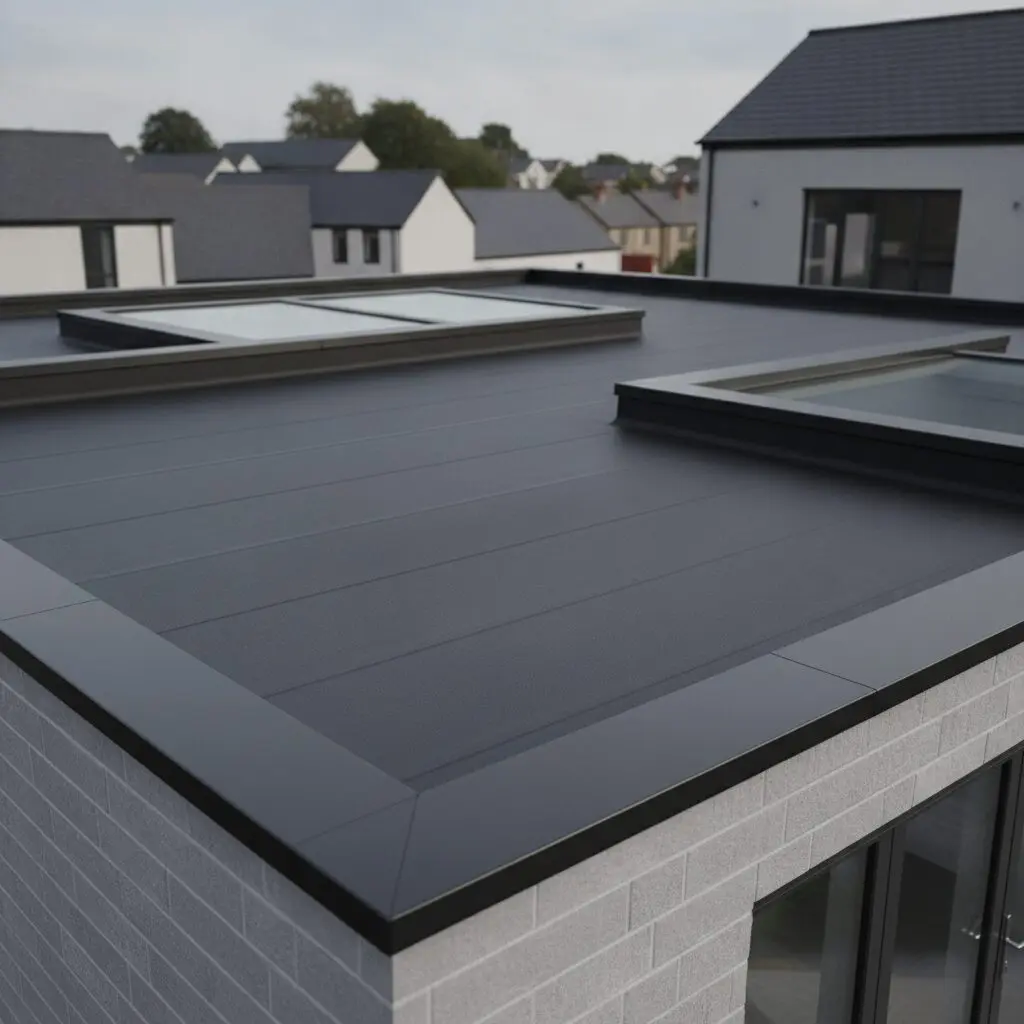
Flat Dormer Roof Materials: EPDM, GRP and Felt Compared
The flat roof element of a dormer conversion is where material specification really matters. Three options are in common use across Sheffield:
EPDM Rubber Roofing — The Recommended Choice
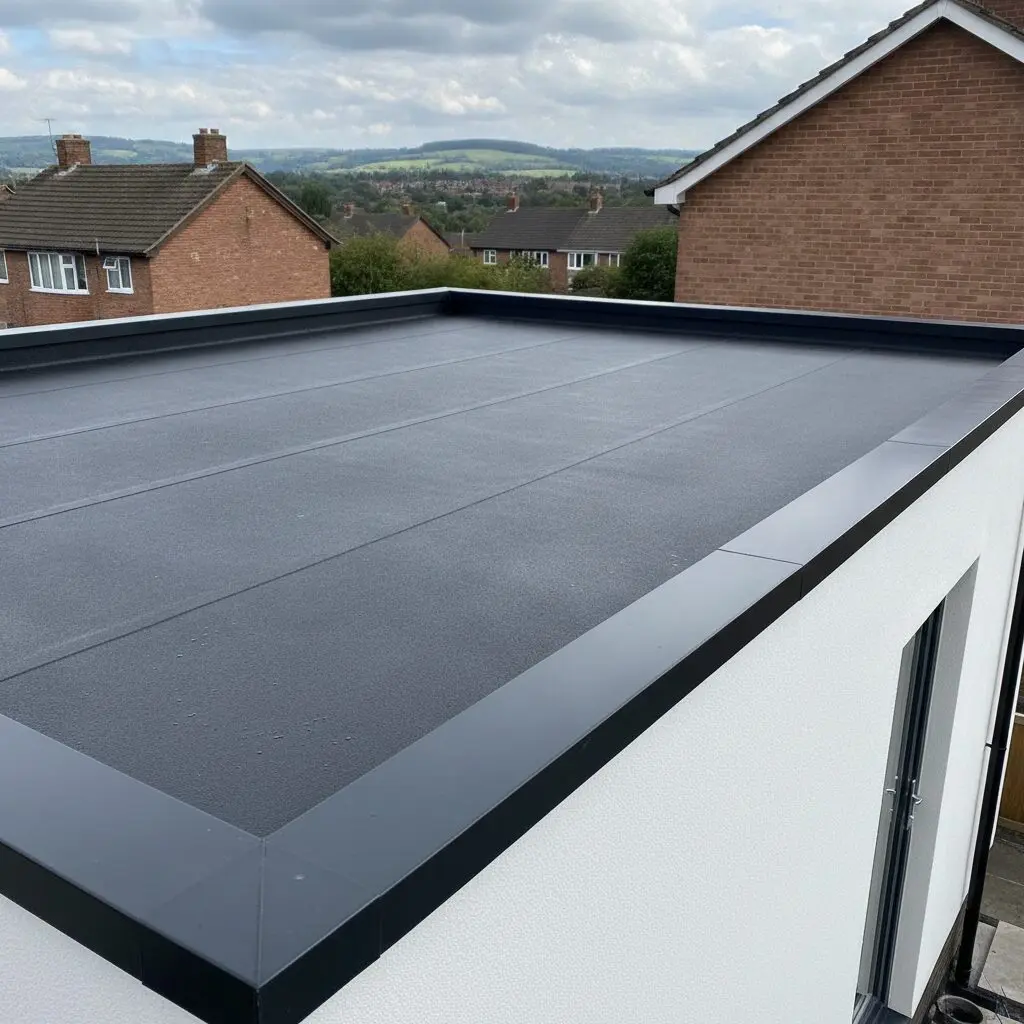
EPDM (ethylene propylene diene monomer) has become the professional standard for quality flat roofing. It’s a synthetic rubber membrane that’s flexible, UV-resistant, and handles Sheffield’s weather — freeze-thaw cycles, heavy autumn rain, summer UV exposure — particularly well. Properly installed, EPDM achieves a lifespan of up to 50 years. Seams are fully bonded rather than lapped, eliminating the main failure point of older felt systems. For a new dormer roof intended to last the life of the conversion, EPDM is what we recommend.
GRP Fibreglass Roofing — Seamless and Durable
GRP (glass-reinforced plastic) creates a completely seamless, rigid shell over the dormer surface. Typical lifespan is 25–30 years. The seamless finish eliminates joint failure, and the rigid surface is well-suited to standard dormer geometries with a solid substrate. For more on GRP as a flat roof system, see our GRP fibreglass flat roofing guide for Sheffield homeowners.
Felt Roofing — Cheaper but Shorter-Lived
Traditional felt is the cheapest upfront option and the one most builders default to if they don’t work with a specialist flat roofer. It works, but with a lifespan of 10–15 years it typically needs replacement before the rest of your conversion does. For a new dormer where you want long-term performance, EPDM or GRP is almost always the better investment.
What the Roofwork Actually Involves
From a roofer’s perspective, a dormer conversion is a more involved job than a straightforward re-roof. The scope typically includes:
- Stripping the existing roof slope in the dormer zone — tiles, battens, and underlay removed back to the rafters.
- Working around structural alterations — the builder and structural engineer handle the new timber frame and any steelwork; the roofer sequences around this and maintains weatherproofing throughout.
- Weatherproofing the dormer cheeks — the vertical sides where the new dormer meets the existing roof need careful detailing, usually with lead flashing stepped into the existing tiles.
- Installing the flat dormer roof — laying a plywood substrate, then applying the chosen membrane (EPDM, GRP, or felt) with correctly formed upstands at all edges and abutments.
- Lead flashings at the main junction — where the dormer meets the slope above and below is one of the highest-risk details. Our roofing service covers all lead flashings and junction detailing across Sheffield and South Yorkshire.
- Reinstating tiles on the main slope around the dormer where they’ve been disturbed during construction.
Depending on size and specification, the roofwork phase of a dormer conversion typically takes 2–5 days on site.
Sheffield Dormer Loft Conversion Costs (2026)
Dormer loft conversions in Sheffield typically range from £35,000 to £48,000 for a standard rear dormer on a semi-detached or terraced property, according to TradeCost.uk’s 2026 Sheffield data. Sheffield runs approximately 5% cheaper than the national average, which makes it a relatively cost-effective city for this type of work compared with Leeds or Manchester.
Within the total conversion cost, the roofwork element — flat roof installation, lead flashings, and tile reinstatement around the dormer — typically accounts for £3,000–£8,000 depending on dormer size and the membrane system chosen. Specifying EPDM over felt costs more upfront but significantly reduces the likelihood of repairs within the first decade.
Do You Need Planning Permission for a Dormer in Sheffield?
Most rear dormers in Sheffield qualify as permitted development and don’t require planning permission, subject to standard conditions:
- The dormer must not extend beyond the highest point of the existing roof ridge
- Materials should be similar in appearance to the existing house
- Front dormers (facing a highway) fall outside permitted development in most cases
- Properties in conservation areas or listed buildings require a full planning application
Sheffield City Council has specific policies for the city’s many Victorian and Edwardian streets. Your architect or builder should confirm permitted development status before any work starts. Hip-to-gable conversions (which alter the roof profile itself) typically require planning permission regardless of which direction they face.
What to Look For in a Sheffield Dormer Roofer
Not every roofer takes on dormer work — it requires experience with flat roofing systems and junction detailing that goes beyond routine tile replacement. When sourcing the roofwork element of your dormer conversion, look for:
- Demonstrated EPDM or GRP experience — ask to see examples of flat roof dormer jobs or references from recent dormer projects in Sheffield
- Solid lead flashing knowledge — the detail where the dormer meets the main slope is where most dormer leaks originate; this must be right
- Trade coordination experience — the roofer needs to work in sequence with the conversion builder, maintaining weather protection throughout
- A separate written guarantee for the flat roof — not just covered under the builder’s general conversion guarantee
AJR Roofing carries out dormer flat roofwork across Sheffield and South Yorkshire, working with homeowners directly or alongside conversion builders. We’re happy to quote the roofwork element separately so you have a clear line item in your overall budget. Also worth reading before your conversion starts: our guide to Velux window installation in Sheffield — many dormer conversions include a Velux alongside or instead of a full dormer.
Get a free quote for the roofwork
FAQ: Dormer Loft Conversion Roofwork in Sheffield
What type of roof does a dormer loft conversion have?
Most dormers in Sheffield use a flat roof, typically finished with EPDM rubber or GRP fibreglass — both durable options well-suited to the low-pitch surface of a box dormer. Front-facing dormers or those in conservation areas may use a small pitched roof to match the existing property’s character.
How long does a dormer flat roof last?
EPDM rubber dormer roofs can last up to 50 years when properly installed. GRP fibreglass typically achieves 25–30 years. Traditional felt has a shorter lifespan of around 10–15 years. For a new dormer conversion, EPDM or GRP is almost always the better long-term investment.
Do you need planning permission for a dormer loft conversion in Sheffield?
Most rear dormers in Sheffield qualify as permitted development and don’t need planning permission, provided they stay within the roof ridge height and materials match the existing house. Front-facing dormers, listed buildings, and conservation area properties typically require a full planning application. Always confirm with Sheffield City Council or your architect before work begins.
How much does the roofwork cost on a dormer conversion?
The roofwork element — flat roof installation, lead flashings, and tile reinstatement around the dormer — typically costs £3,000–£8,000 depending on size and membrane specification. Total dormer conversions in Sheffield average £35,000–£48,000, with roofwork forming part of that budget.