

Asbestos Garage and Outbuilding Roofs in Sheffield: How to Spot One and What the Law Says
Sheffield City Council puts it plainly: asbestos can be found in any residential or industrial building built or refurbished before the year 2000, and it specifically names garages, sheds and outbuildings as places to look. That covers an enormous share of the detached and semi-detached housing across Sheffield, from the inter-war estates out to the 1970s builds on the city’s edges.
If your garage has a grey, corrugated roof and it has been there as long as you can remember, there is a reasonable chance it is asbestos cement. That is not a reason to panic. It is a reason to know what you are looking at before anyone puts a drill, a ladder or a boot near it.
Why So Many Sheffield Garages Have an Asbestos Cement Roof
Asbestos cement was cheap, light, fireproof and easy to cut. For roughly forty years it was the obvious material for anything that needed a weatherproof lid but not a full structural roof — prefabricated garages, coal stores, lean-to sheds, allotment buildings and the odd outhouse. Sheffield’s post-war housing expansion landed squarely inside that window.
The result is that a lot of the sectional concrete garages sitting beside houses in Woodseats, Gleadless, Hillsborough, Ecclesfield and the Sheffield suburbs still carry their original roof. They were never designed to last sixty years. Most are now well past the point where the surface has weathered, the fixings have rusted and the sheets have gone brittle.
How to Identify an Asbestos Cement Roof
There is no way to be certain from the ground. Anyone who tells you otherwise is guessing. What you can do is judge how likely it is, then act cautiously until you know.
Strong indicators of asbestos cement:
- Corrugated grey sheets with a deep, regular profile, often in a “big six” or smaller profile pattern.
- A dull, chalky, slightly fibrous surface rather than the smooth face of modern fibre cement or the glossy face of coated steel.
- Age — the structure predates 2000 and the roof has never been replaced.
- Green or black algae staining in the corrugation troughs, which weathered asbestos cement attracts readily.
- Exposed cut edges that look like compressed grey fibre rather than a clean mineral break.
Things that are usually not asbestos: profiled metal sheets with a painted or plastisol finish, translucent GRP roof lights, modern fibre cement with a crisp factory colour, and anything installed after 2000.
Is It Dangerous If It Is Intact?
Asbestos cement is a bonded material. The fibres are locked into a cement matrix, and while that matrix is whole they stay where they are. Sheffield City Council’s own guidance describes asbestos as not immediately dangerous where it is well sealed or painted over, the panels are unbroken and the surfaces are not exposed — and says you should seek help where paint is flaking away, or the material has been chipped, broken or damaged.
So the honest position is this: a sound asbestos cement garage roof, left alone, is a low-risk item. A cracked, crumbling, drilled, sawn or jet-washed one is a different proposition entirely, because every one of those actions breaks the matrix and puts fibres into the air.
That distinction matters practically. It means the safest thing you can do with a suspect roof in reasonable condition is often nothing at all, until you have a plan and the right people lined up.
What the Law Actually Says About Removal
This is the part most people get wrong in both directions — some assume it is illegal to touch, others assume it is a Saturday job.

Removing asbestos cement is classified as non-licensed work. Sheffield City Council states directly that you can remove asbestos cement without a licence providing you have had appropriate information, instruction and training. It also makes the point that neither the council nor the Health and Safety Executive have legal powers to assist private householders with the removal of asbestos cement sheets.
“Non-licensed” is not the same as “unregulated”. The Health and Safety Executive publishes a whole series of task sheets covering exactly this work, including a dedicated sheet on removing asbestos cement sheets and dismantling a small structure such as a garage. It sets out the method: keep the material wet, take sheets down whole rather than breaking them, protect the surrounding ground, wear the correct respiratory protection, and double-wrap what comes off.
Other asbestos materials are a different matter. Sprayed coatings, pipe lagging and most work on asbestos insulating board must be done by a licensed contractor with formal notification. If what you are looking at is not clearly cement sheet, do not assume the relaxed rules apply.
Why DIY Removal Goes Wrong
Here is what most guides on this subject leave out. The legal barrier to a homeowner removing an asbestos cement garage roof is low. The practical barriers are high, and they are not really about asbestos at all.
The roof will not hold you
Asbestos cement roofing is a fragile surface. It is not designed to be walked on and a sixty-year-old weathered sheet certainly will not take a person. Falls through fragile roofs remain one of the most serious causes of injury in construction work. Any safe method involves working from a proper platform or tower, never from the roof itself.
The fixings have rusted solid
The whole method depends on lifting sheets off intact. After decades of weather the hook bolts and washers are usually corroded into place. Forcing them is how a sheet snaps — and a snapped sheet is the exact event the method exists to prevent. Cutting fixings cleanly, from a stable platform, takes patience and the right tools.
The temptation to break sheets for the car boot
Whole corrugated sheets are awkward and long. Every year someone decides to snap them into manageable pieces to fit a vehicle. That single decision turns a controlled job into a contaminated driveway.
Disposing of It in Sheffield
Asbestos waste cannot go in a household bin, a builder’s skip or a general waste transfer. It is hazardous waste and it has to be handled as such.
For domestic quantities, some of Sheffield’s household waste recycling centres accept cement-bonded asbestos from householders — but not all of them do, and the ones that do have strict conditions: domestic cement-bonded material only, double-wrapped, with the outer layer clear so both wrappings can be seen. Sites, opening days and acceptance rules change, so check the current position for your nearest centre before you load anything into a car.
For anything more than a few sheets, or where the material is already broken, the sensible route is a specialist who removes and disposes of it under one arrangement, with the waste transfer documentation to prove where it went. If you ever sell the property, that paperwork is worth having.
What Goes on Afterwards
Once the old sheets are gone you have a bare frame and a decision to make. This is the point where we get involved, and the options are genuinely better than what came off.
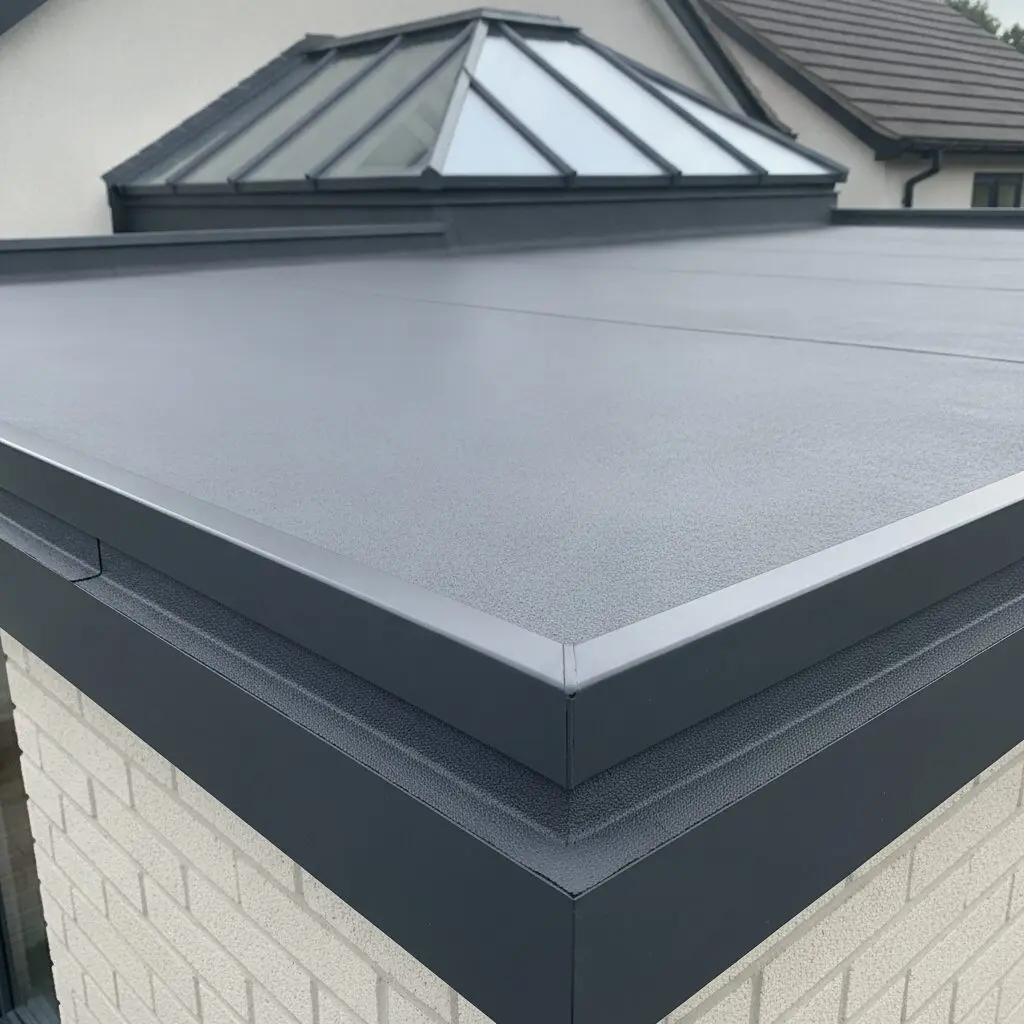
A single-piece rubber membrane over a new deck. No seams across the field of the roof, very long service life, and a good fit for a flat or shallow garage roof.
A seamless laid-in-place fibreglass roof with a hard wearing finish. Neat trims, no joints, and it copes well with a roof that gets occasional foot traffic.
Where the garage keeps its pitched profile, modern box-profile steel sheet is the direct like-for-like swap — light, fast to fit and far stronger than what it replaces.
Sheets rarely come off a frame that is in perfect order. Expect some timber repair or a full new deck before any covering goes down.
Which one suits depends on the pitch of the existing structure, how you use the building and whether the frame is sound. Our flat roofing service covers the deck-and-membrane options, and if you want to weigh the membranes against each other properly we have written a full comparison of EPDM, GRP and felt for Sheffield homes. There is also a broader look at what a flat roof replacement involves if the garage is a flat-roofed build rather than a pitched sectional one.
On cost, the useful thing to understand is the shape rather than a number. Two separate trades are involved — removal and disposal, then the new roof — and the removal side is driven by sheet count, access and condition, while the new roof is driven by area, covering choice and how much of the frame needs putting right. We quote the roofing element properly, in writing, after looking at the structure.
AJR Roofing covers Sheffield and the surrounding South Yorkshire and north Derbyshire area, including Rotherham, Chesterfield and Doncaster.
Get a free quote
Frequently Asked Questions
Can I legally remove an asbestos garage roof myself in the UK?
Yes. Asbestos cement is non-licensed work, and Sheffield City Council confirms a householder can remove it without a licence provided they have had appropriate information, instruction and training. The legal permission is the easy part. Doing it safely from a proper platform, getting sheets off intact and disposing of them lawfully is where most people find the job is bigger than it looked.
How do I know if my garage roof is asbestos or modern fibre cement?
You cannot tell reliably by eye — they look very similar. Age is the best clue: if the structure predates 2000 and the roof is original, treat it as asbestos until proven otherwise. Where the answer matters, have a sample taken and tested by someone competent to do it.
Is it safe to pressure-wash a suspected asbestos garage roof?
No. Pressure washing is one of the worst things you can do to asbestos cement. It strips the weathered surface, releases fibres in the spray and spreads contaminated water across the surrounding ground. If a roof is covered in moss and you suspect asbestos, leave it alone and get it identified first.
Does an asbestos garage roof have to be removed before I sell the house?
There is no legal requirement to remove intact asbestos cement from a domestic property. A buyer’s surveyor may well flag it, and it can become a negotiating point, but a sound sheet roof left undisturbed is not a breach of anything.
Can you re-roof over the top of the existing asbestos sheets?
Overboarding is sometimes proposed, and occasionally it is the right call because it avoids disturbing the material at all. More often the underlying frame is not strong enough to carry an additional covering, and you end up with a hidden problem for whoever owns the building next. We look at the structure before advising either way.