

Birds and Bats in Your Roof: What Sheffield Homeowners Can and Cannot Legally Do
Most people ring a roofer about birds nesting in the roof in April or May, which is precisely the month when the law says you have to leave them alone. Under the Wildlife and Countryside Act 1981 it is an offence to intentionally take, damage or destroy any active wild bird’s nest — and that applies just as much to a starling behind your fascia board as it does to anything on a nature reserve.
This guide sets out what is actually protected, what a roofer can and cannot do about it, what the damage really looks like, and how to proof a Sheffield roof properly once the season is over.
How Birds and Bats Get Into a Roof
Almost never through the middle of a roof. It is nearly always the edges, and nearly always a gap that was already a maintenance issue before anything moved in.
- Under the eaves — the gap between the top of the wall and the underside of the first tile course, especially where the felt has torn back or the eaves comb is missing.
- Behind the fascia and soffit — a rotted timber fascia or an ill-fitting soffit joint leaves a slot straight into the roof void.
- At the verge — where old mortar bedding at the gable edge has cracked out, leaving an open channel along the tile battens.
- A slipped or missing tile — one displaced tile is an open door, and it will be found within days.
- Under lead flashing — where flashing has lifted at a chimney or an abutment, the gap behind it is exactly the size a bat looks for.
The RSPB notes that bats will use external cavities on a building, roosting under roof tiles and lead flashings and even in gaps in mortar or behind fascias and soffits. So a bat roost is not necessarily a colony in your loft with droppings all over the insulation. It can be a handful of animals tucked under a single tile, invisible from inside.
The Law on Nesting Birds
The rule is simpler than people expect, and stricter.
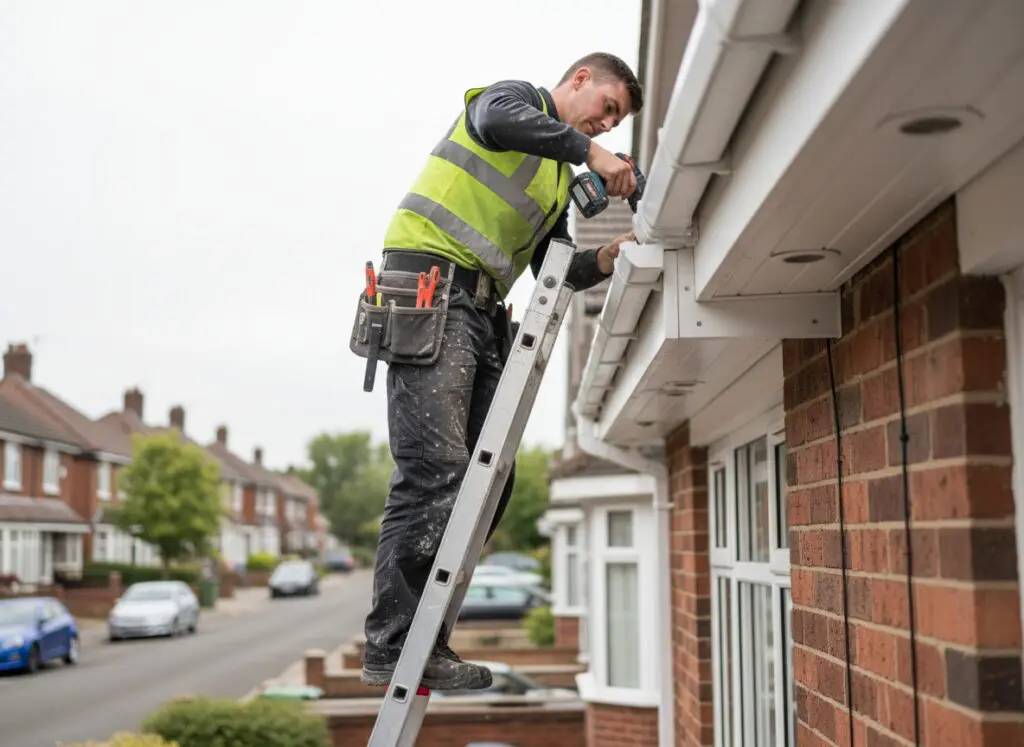
An active nest — one being built, holding eggs, or holding young — cannot legally be taken, damaged or destroyed. You must allow the chicks to leave before removing the nest or blocking the entrance to it. The RSPB’s guidance goes further and advises against starting building work at all if you know birds are nesting, and where a nest is discovered mid-job, to leave it alone where possible. If work genuinely cannot be paused until the young have fledged, the route is to contact Natural England for advice rather than to press on.
The practical consequence for a homeowner is a timing problem, not a permanent block. Nesting season for the birds that typically use UK roofs broadly runs from early spring into late summer, and some species raise more than one brood. Once a nest is genuinely finished with, the gap can be cleared and closed.
The Law on Bats — and Why It Is Stricter
Bats are the reason a roof job occasionally stops dead, and the protection is much broader than most homeowners realise.
All bat species, their breeding sites and their resting places are fully protected. Government guidance is explicit that you are breaking the law if you damage or destroy a breeding or resting place, obstruct access to a resting or sheltering place, or intentionally or recklessly disturb a bat in a structure it is sheltering in. Renovating a building is named directly as an activity that can affect bats. The penalties are not nominal either — up to six months’ imprisonment and an unlimited fine.
The critical point is the empty roost. A bat roost stays protected whether or not bats are in it at the time. Bats return to the same places at the same points in the year, so a gap that is deserted in November may be a maternity roost in June. Sealing it in the quiet month is still an offence.
Where a roost genuinely cannot be avoided, the route is a licence from Natural England. For smaller domestic work there is a free advice line first: the National Bat Helpline, run by the Bat Conservation Trust on Natural England’s behalf, which can arrange for a volunteer bat roost visitor to come and look at the property.
What Damage They Actually Cause
Worth being honest here, because the answer differs enormously between species and the internet tends to overstate it.
Bats bring no bedding, carry no nesting material in and do not gnaw. Their droppings are dry and crumble to dust. In roofing terms a bat roost is close to harmless — the issue is legal, not structural.
The nest itself is bulky material pushed into the eaves. It can displace insulation, block ventilation paths at the eaves and tear at aged underlay as birds work their way in and out.
Displaced nest material and general debris is one of the more common causes of a gutter that overflows down a gable wall each time it rains hard.
Usually the real defect. Birds do not make holes in sound roofs — they find existing ones. The nest is a symptom of a failed verge, a rotted fascia or a slipped tile.
That last one is the point worth taking away. In most of the roofs we look at, the wildlife is a signal rather than the problem. If a roof has been open long enough for something to move in, the underlay, verge or eaves detail beside it usually needs attention regardless.
When You Can Act, and How
Plan roof proofing for outside the nesting season — late summer through to early spring is the sensible window in South Yorkshire — and check before starting rather than assuming.
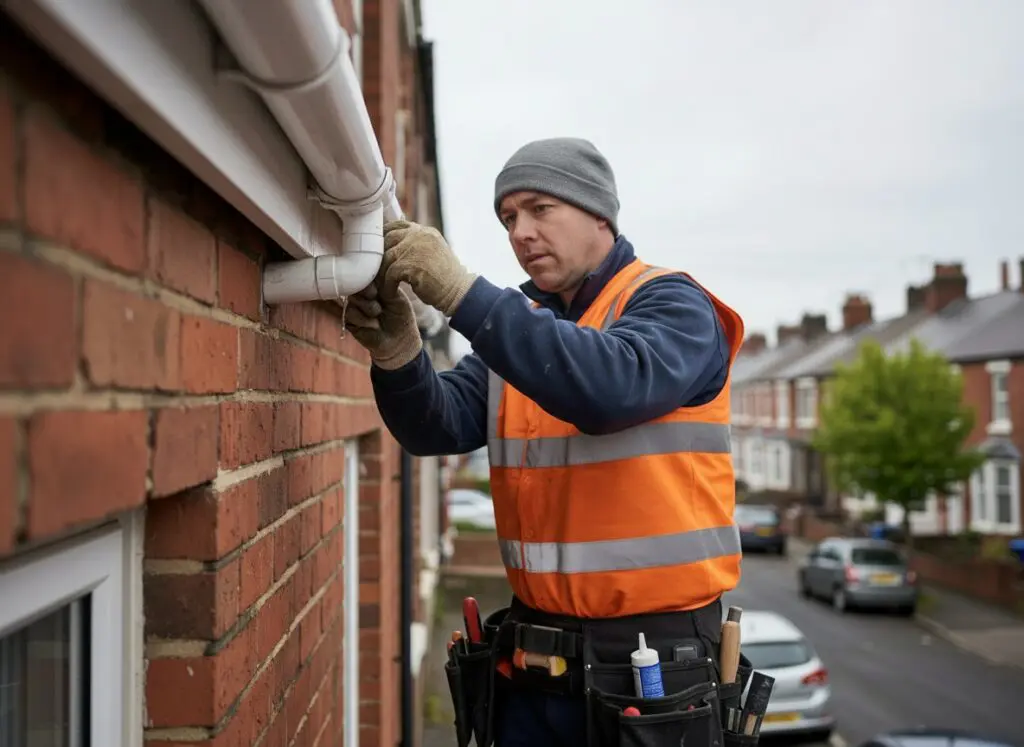
Good proofing is roofing work, not pest control. The gaps get closed with the correct roofing detail, which is the same repair the roof needed anyway:
- Eaves comb filler fitted along the first tile course to close the gap under the tiles without blocking airflow into the loft.
- Dry verge units to replace failed mortar bedding at the gable, which closes the batten channel permanently.
- Fascia and soffit replacement where the timber has rotted out — the correct fix for a gap behind the board is a sound board, not a filler.
- Repointing or re-dressing lead flashings that have lifted away from a chimney or abutment.
- Replacing slipped and missing tiles and repairing the underlay beneath them.
Ventilation is the detail people get wrong when they proof a roof themselves. Sealing every gap at the eaves without a ventilated alternative turns an airy loft into a damp one, and you trade a bird problem for a condensation problem. We have written separately about loft condensation and roof ventilation, because it is a genuinely common consequence of well-meant DIY.
Where the gaps are around the roofline itself, the work usually sits with our fascia, soffit and guttering service — and if the gutters have taken on nest debris it is worth reading our guide to guttering in Sheffield at the same time, since the two jobs are almost always done together.
Chimneys Are a Separate Problem
A chimney is the one place where nesting is a genuine safety issue rather than an inconvenience. Jackdaws in particular will drop sticks down an open flue until the pile wedges, and a blocked flue on a working fire or a gas appliance is dangerous rather than merely annoying. It is also a poor outcome for the birds, which is why the RSPB draws a line between chimneys and the rest of the roof.
The permanent answer is a cowl fitted over the pot — a bird guard or a combined guard-and-cowl sized to the appliance below. Fitted once, outside the nesting season, it ends the problem for good. Our guide to chimney cowls covers the types and which one suits which flue.
If We Find Bats Mid-Job
It happens, usually when tiles come off a gable or a flashing is lifted, and the answer is not a judgement call on the day.
Work stops in that area. We do not seal, disturb or move anything, and the roof is made safe and weathertight as it stands. The next step is advice — the National Bat Helpline for a domestic property, or a licensed ecologist where the work is larger or planning permission is involved. Depending on what is found, the job may simply be rescheduled to a different time of year, or it may need a licence from Natural England before it continues.
It is a delay nobody enjoys. It is also very much cheaper than the alternative, and it is the only lawful way to proceed.
AJR Roofing works across Sheffield and the wider South Yorkshire area, including Rotherham, Chesterfield and Barnsley.
Get a free quote
Frequently Asked Questions
Can I remove a bird’s nest from my roof?
Not while it is active. Under the Wildlife and Countryside Act 1981 it is an offence to intentionally take, damage or destroy an active wild bird’s nest. You must wait until the young have flown before removing the nest or blocking the entrance. Once the nest is genuinely finished with, it can be cleared and the gap closed.
What months can roof proofing work be done?
Aim for late summer through to early spring, once broods have fledged and before the next season starts. There is no single fixed date because species differ and some raise more than one brood, so the practical approach is to check the specific gap for activity before work begins rather than to rely on the calendar alone.
Do I need a bat survey before roof work on my house?
For routine repairs on a typical house, usually not. Where the work involves stripping a roof, converting a loft, or a building with known bat activity, an ecological check is the sensible and often the required step. Government guidance is clear that renovating a building can affect bats, and free advice is available through the National Bat Helpline for domestic-scale work.
Is it illegal to block a gap that bats used last year but is empty now?
Yes. This is the part people are most often caught out by. Bat roosts are protected whether or not bats are present at the time, and obstructing access to a resting place is specifically named as an offence. An empty gap in winter can be a maternity roost in summer.
Will a bird guard on the chimney stop nesting completely?
On the flue, yes — a correctly sized cowl or bird guard closes the pot permanently and is the standard fix for jackdaws. It does not affect nesting elsewhere on the roof, so if birds are also getting in under the eaves or behind a fascia, those gaps need addressing separately.