
Roof Valley Repair in Sheffield: Lead, GRP and Dry Valleys Compared
Roof repairs guide | Sheffield & South Yorkshire
Quick answer
Roof valley repair in Sheffield almost always starts with the same misdiagnosis. A roof valley is the channel where two roof slopes meet, and it carries more water than any other part of the roof. Most Sheffield valleys are lead-lined. They rarely wear out evenly — they split at one point, usually where a single over-long sheet of lead has been forced to expand and contract for decades.
Here is the thing most roof valley guides get wrong. They talk about lead “wearing out”, as though the metal thins gradually like a brake pad. That is not usually what happens on a Sheffield house.
Lead moves. It expands in the sun and contracts overnight, and it does that every day for fifty or sixty years. When a valley has been lined with one long, continuous sheet instead of shorter sections with proper laps, that movement has nowhere to go. Eventually the lead tears — almost always across the middle of the run, almost always at the same point on both sides of a terrace, because both were done the same way on the same day.
That is why a leak in a valley is so often a detailing problem rather than an age problem. And it is why patching it without fixing the detail buys you two winters, not twenty years.
What a roof valley actually is
A valley is the internal angle formed where two pitched roof planes meet — think of an L-shaped house, a rear outrigger joining the main roof, or a dormer cutting into a slope. Rainwater from both slopes funnels into that single channel before it reaches the gutter.
That concentration is the whole problem. A square metre of valley can be shedding the run-off from twenty square metres of roof. Any defect there is exposed to far more water, far more often, than the same defect out on an open slope.
Valleys also sit lower than the surrounding tiles, so they collect what the roof sheds: moss, grit off the tile surface, leaves, and the sand that washes out of old bedding mortar. A blocked valley does not just overflow — it holds standing water against the lining and against the tile edges either side.
The four valley types you will find on Sheffield homes
Sheffield’s housing stock is unusually mixed — Victorian and Edwardian terraces, interwar semis, post-war estates and a lot of stone-built property in the western suburbs. You will meet all four of these.
1. Lead-lined open valley
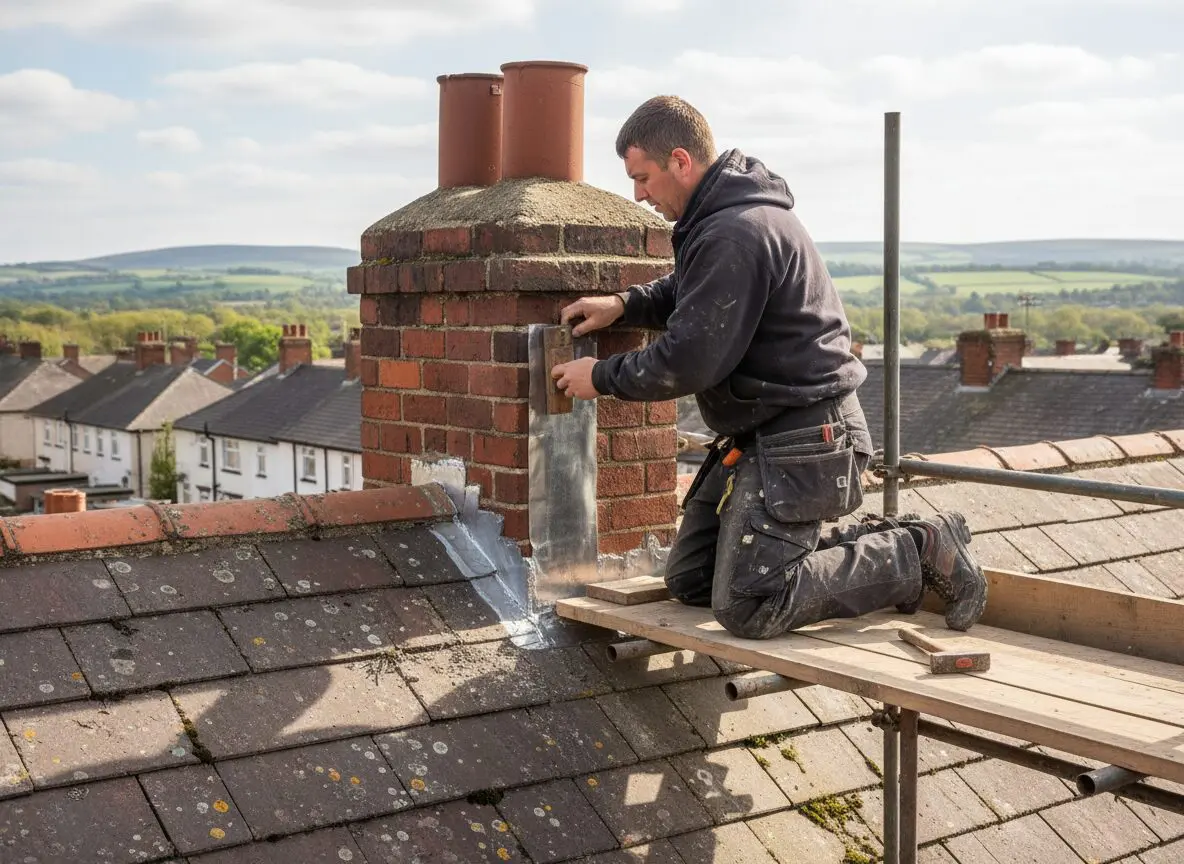
The traditional detail and still the best one when it is done properly. Sheet lead is dressed into the valley over a timber board, with the slates or tiles cut and laid to leave a clear channel down the middle. Correctly detailed — shorter lengths, proper laps, room to move — a lead valley will outlast the tiles above it. Incorrectly detailed, it splits.
2. GRP (fibreglass) valley
A resin-and-glass-matting lining laid in situ or fitted as a preformed trough. It does not suffer the thermal-movement splitting that catches lead out, and it is cheaper. The trade-off is repairability and appearance: GRP is harder to blend into an old roof, and when it does fail it tends to craze or delaminate rather than tear in one obvious place.
3. Dry valley (preformed plastic or GRP trough)
A factory-made channel that sits under the cut tiles with no mortar at all. It is quick, consistent, and it removes the weak point that mortar-bedded cut tiles create. On modern concrete-tiled roofs it is now the default. On a Victorian slate roof it can look wrong — the profile is deeper and more visible than a dressed lead valley.
4. Swept or laced valley
No lining at all. The plain tiles or stone slates are swept round the angle in a curve, or laced across it, so the covering itself forms the valley. You see this on older plain-tiled and stone-slated roofs, particularly out towards Dore, Totley and the Peak fringe. It is skilled work and few roofers still do it well.
Our view: if the roof is slate or plain tile and the house has any architectural character, re-line it in lead and detail it properly. If it is a concrete-tiled roof from the 1960s onwards, a dry valley is the sensible, honest choice. The mistake is putting a deep plastic trough into a Victorian slate roof to save a few hours.
How to tell your valley is the problem
Valley leaks have a signature, and it is worth knowing it before you start pulling ceilings down.
- The damp patch is inside the angle of the building — where the back addition meets the main house, or under a dormer cheek. Not out in the middle of a room.
- It only shows up in heavy or driven rain, not in every shower. A split lets water through in proportion to the volume passing over it.
- There is staining on the underside of the valley board if you can get a look from the loft, often with tide marks running down the rafters either side.
- You can see mortar missing from the cut tile edges from ground level with binoculars, or vegetation growing in the channel.
- Both sides of a semi or terrace have the same symptom. That is the tell for a detailing fault rather than storm damage.
If the damp is around a chimney or a bay instead, you are more likely looking at flashings — our guide to lead flashing repairs around bay windows and dormers covers those. And if the water is appearing well away from any junction at all, the secondary barrier under the tiles may be the culprit; the signs of failed roof underlay are quite different.
Repair or re-line?
A genuine single-point repair is possible, and sometimes right. If a valley is otherwise sound — lead of decent thickness, correct laps, no fatigue creases — a lead-welded patch by someone who can actually weld lead will last.
Re-lining is the answer when any of these are true:
- The lead is one continuous run from ridge to eaves. It will split again somewhere else, and soon.
- There are multiple splits or a line of fatigue creases. The metal has been working for years; patching one tear just moves the stress.
- The valley board underneath has rotted. No lining performs on a soft substrate, and you cannot tell it has gone until the lead comes up.
- The cut tiles either side are loose or the bedding has washed out. Water is getting in beside the lining, not through it.
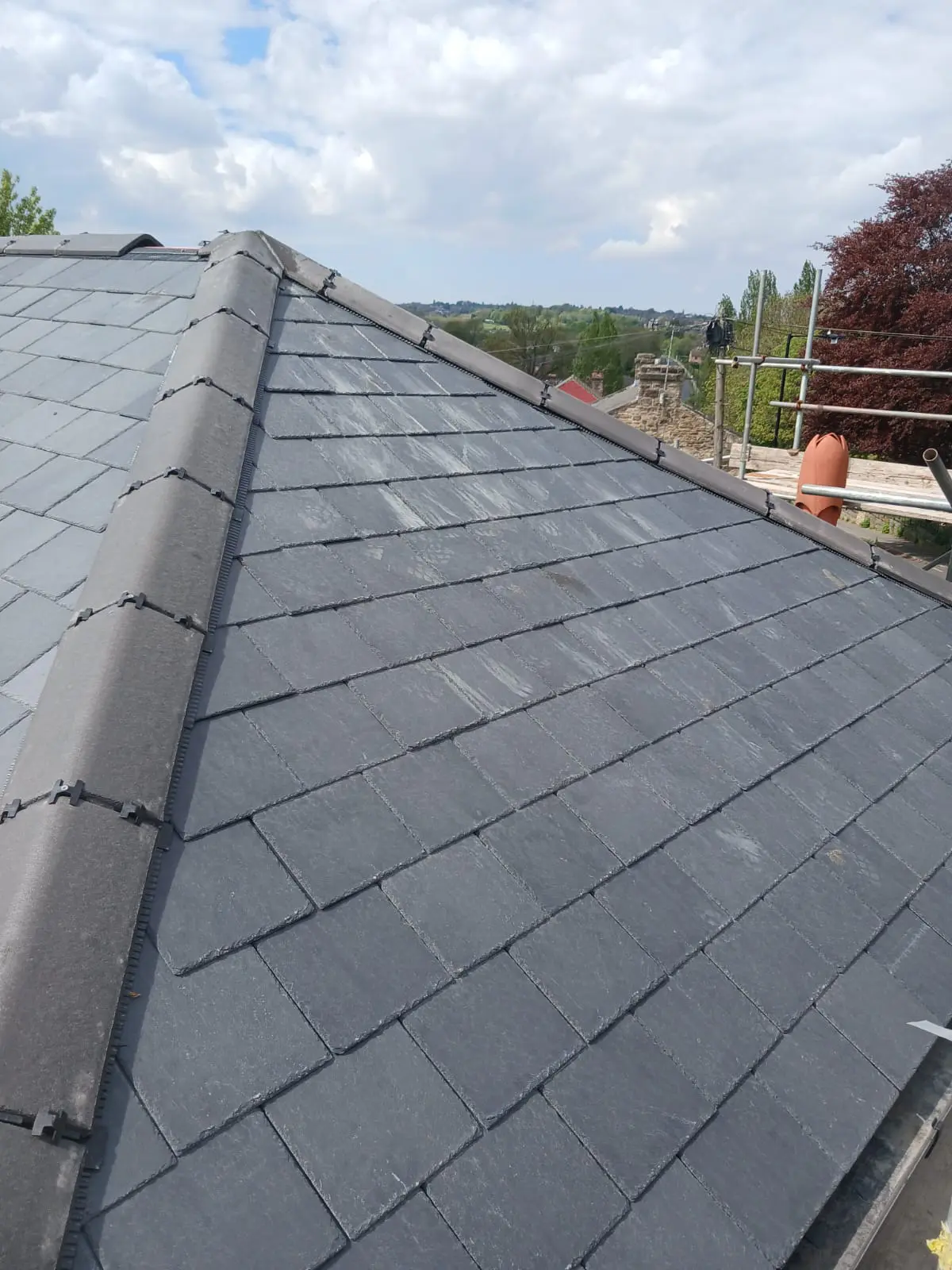
Re-lining means stripping the tiles or slates back roughly a course either side, taking up the old lining, checking and replacing the board and any perished battens, laying new lining in properly lapped sections, and re-setting the cut edges. On a typical semi it is a day’s work per valley plus access. It is not a job that can be done properly from a ladder.
What drives the cost
We do not publish valley prices, because the honest answer is that the lining is rarely the biggest line on the quote. What moves the figure is:
- Access. A valley over a rear outrigger, above a conservatory or facing a shared alley usually needs a scaffold or a tower rather than a ladder.
- Length and pitch. A short valley on a shallow slope is a different job to a full ridge-to-eaves run on a steep Victorian roof.
- What is under the lining. Rotten boards and perished battens only appear once the old lining is off.
- Matching the covering. Cutting new slates or sourcing matching plain tiles takes time; concrete interlocking tiles do not.
We inspect before we price. Nothing on this page is a quote, and anyone giving you a valley price from a photograph is guessing at the three things that actually matter.
Conservation areas: check before you change the material
This one catches people out. Swapping a dressed lead valley for a plastic dry valley changes what the roof looks like from the street, and in parts of Sheffield that matters legally as well as aesthetically.
Sheffield City Council records 38 conservation areas within the city boundary, covering places such as Nether Edge, Broomhill, Ranmoor, Dore, Totley, Fulwood, Grenoside and Ecclesfield — a lot of the housing where traditional lead and swept valleys are found. The council’s guidance is that repairs, replacements and alterations need to be in keeping with the character of the building and the area, and that some conservation areas carry extra controls requiring permission first.
Outside those areas the picture is simpler. The Planning Portal’s guidance is that work to the roof of a house that does not materially affect its external appearance will usually not require planning permission — which is exactly why a like-for-like lead re-line is straightforward and a visible change of material may not be. If the property is listed, assume you need consent and check with the council before anything comes off the roof.
AJR Roofing inspects before we price — free, no obligation. Call 07852 940350 or email photos to ajrroofing17@gmail.com.
Frequently Asked Questions
How long does a lead roof valley last?
Properly detailed — laid in shorter lapped sections on a sound board — a lead valley commonly outlasts the roof covering above it. Poorly detailed, in one long unbroken run, it can split within twenty to thirty years. The workmanship matters far more than the age.
Can you repair a roof valley without removing the tiles?
A small, isolated split can sometimes be lead-welded in place. Anything involving the board underneath, the laps, or the cut tile edges means stripping back a course or so either side. Sealants and self-adhesive tapes over a split are a temporary measure at best and usually make the eventual repair harder.
Why does my roof leak where two roofs meet?
Because that junction carries the run-off from both slopes into one narrow channel, so any fault there sees several times the water of an equivalent fault on an open slope. It is also where two separate pieces of work have to marry up, which is where detailing errors concentrate.
Is a dry valley better than lead?
Better on a modern concrete-tiled roof, where it is quicker, consistent and removes the mortar weak point. Not better on a Victorian slate or plain-tile roof, where the deeper profile looks wrong and may fall foul of conservation controls. It is a horses-for-courses choice, not a straight upgrade.
Should the whole roof be done at the same time?
Not necessarily. A valley re-line is a legitimate standalone repair. But if the covering is already near the end of its life, or the same scaffold would serve both jobs, doing them together avoids paying for access twice — our roof inspection guide explains what a proper assessment should tell you before you decide.
Do I need to tell my insurer?
Gradual failure of a valley lining is maintenance, not an insured event, so it is normally not a claim. If a storm has physically displaced the lining or the tiles either side, that is different and worth reporting.
Call AJR Roofing on 07852 940350 for a free, no-obligation quote. We inspect before we price — no surprises.
Reviewed and signed off by AJR Roofing— working roofers covering Sheffield, Rotherham, Barnsley, Doncaster, Chesterfield and the surrounding area.
Published 22 October 2026 · Last updated 22 October 2026