
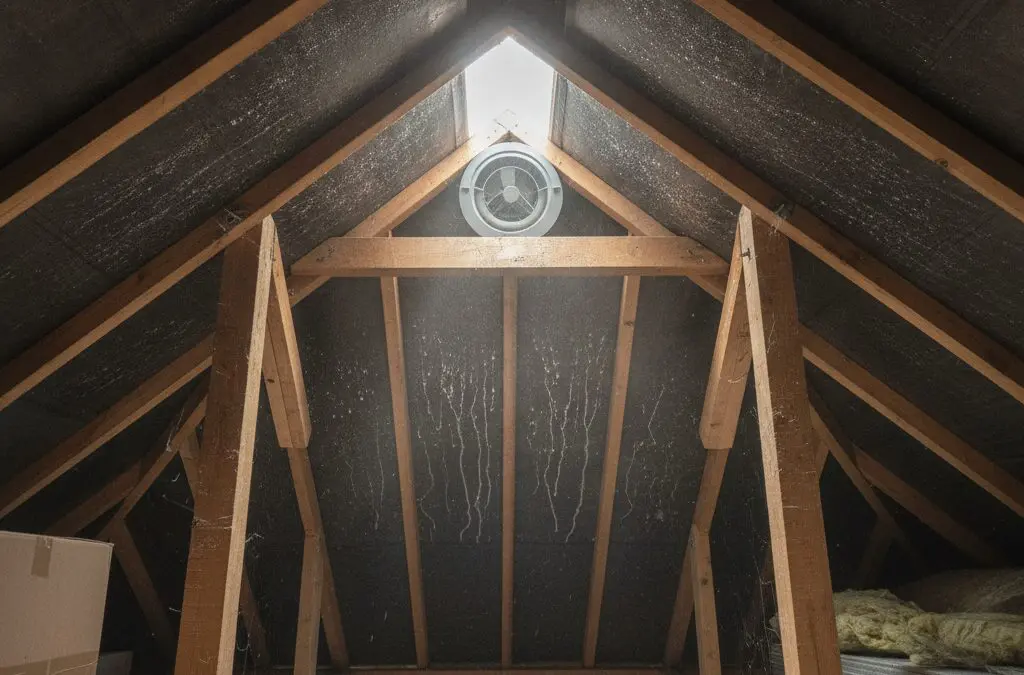
Loft Condensation and Roof Ventilation Problems: Causes, Signs and How to Fix Them
AJR Roofing — Sheffield & South Yorkshire
Finding damp, moisture or mould in your loft is unsettling — especially when your roof looks fine from the outside. In many cases, the problem isn’t a leak at all. It’s condensation caused by poor roof ventilation.
This is one of the most commonly misdiagnosed roofing problems in Sheffield. Homeowners assume they have a leak and pay to have their tiles checked, only to find nothing wrong. The real culprit is warm, moisture-laden air from inside the house rising into a cold, unventilated loft.
Here’s how to tell the difference — and what to do about it.
- Loft condensation is caused by warm moist air entering a cold loft space
- It’s different from a roof leak — no wet weather correlation needed
- Signs include damp felt, wet timbers, mould on rafters and insulation
- Fix: improve ventilation at eaves and ridge; seal gaps from living areas below
- Insulation upgrades can make things worse if ventilation isn’t addressed first
- Untreated, it can cause timber rot and structural damage
What Causes Loft Condensation?
Warm air holds more moisture than cold air. When warm, humid air from your home rises into a cold loft space, it hits the colder surfaces — the felt, the rafters, the roof deck — and the moisture condenses out, just like a cold glass of water on a warm day.
The main sources of moisture in a home are cooking, bathing, drying clothes, breathing and general household activity. In a typical family home, several litres of water vapour are produced every day.
Why is loft condensation getting more common?
Modern homes are better insulated and more airtight than older properties. That’s good for energy bills — but it can trap moisture inside. Combined with loft insulation that reduces heat reaching the roof space, conditions for condensation are often worse in newer or recently upgraded homes.
Common triggers include:
- New loft insulation installed without improving ventilation
- Bathroom or kitchen extractor fans venting into the loft (instead of outside)
- Gaps around loft hatches, pipes and cables that allow warm air to rise
- Blocked or inadequate eaves ventilation
- No ridge ventilation on modern or re-roofed properties
How to Tell If It’s Condensation or a Roof Leak
This is the key question — and the answer saves you money. Here’s how to tell them apart:
| Condensation | Roof leak |
|---|---|
| Damp appears across a wide area, not just one spot | Damp is localised to one area or trail |
| No obvious link to wet weather | Worsens after or during heavy rain |
| Moisture on underside of felt (not coming through) | Water tracks down from a specific entry point |
| Mould on timber, insulation or felt | Watermarks or staining in lines |
| Worst in winter / cold weather | Linked to rainfall, not temperature |
If you’re not sure, an experienced roofer can usually tell the difference quickly. At AJR Roofing, we carry out loft inspections and won’t recommend unnecessary roof repairs if condensation is the actual problem.
Signs of Poor Roof Ventilation
Head into your loft and look for these warning signs:
- Moisture or water droplets on the underside of the felt
- Black or green mould on roof timbers, rafters or the felt
- Wet, clumped or discoloured insulation
- A damp or musty smell when you open the loft hatch
- Frost on the felt or timbers in cold weather
- No visible airflow at the eaves (blocked or absent vent tiles)
Even if you can’t see active drips, mould on the timber is a sign that moisture levels in the loft are consistently too high.
How Roof Ventilation Works
A well-ventilated cold loft works by allowing fresh air to enter at the eaves (the lowest point of the roof), flow across the loft space and exit at or near the ridge (the highest point). This movement of air keeps the loft cool and dry, preventing moisture from building up.
The key components are:
- Eaves ventilation — air enters through gaps at the soffit level, either via ventilated soffit boards, fascia vent strips or individual vent tiles near the eaves
- Rafter ventilation — a 50mm clear gap between the insulation and the roof felt/deck, maintained by rafter trays or insulation stops
- Ridge or high-level ventilation — air exits at or near the top of the roof through a ventilated ridge tile, tile vents or a continuous ridge vent
When any part of this path is blocked or missing, the ventilation fails and moisture can build up.
How to Fix Loft Condensation
The fix depends on the cause, but typically involves a combination of the following:
1. Improve eaves ventilation
Check that air can enter at the soffits. On older properties, the soffits may be solid timber with no vents. Adding fascia vent strips or replacing solid soffits with ventilated soffit boards is a common and cost-effective fix.
2. Add or repair tile vents
If eaves ventilation is already present but airflow is still poor, adding tile vents higher up the roof slope can help create cross-flow ventilation. A roofer can remove individual tiles and replace them with ventilated versions.
3. Install a ventilated ridge
A ventilated ridge system allows warm, moist air to escape at the top of the roof. This is often the single most effective upgrade for a poorly ventilated cold loft. It can be installed at the same time as a ridge repoint or dry ridge system.
4. Seal gaps from living areas below
Reduce the amount of moist air entering the loft by sealing around the loft hatch, pipes, cables and any gaps in the ceiling below. A draught-proofed loft hatch makes a significant difference.
5. Check extractor fans are venting outside
Bathroom and kitchen extractor fans should vent directly to outside — not into the loft space. If the flexible duct from your extractor fan terminates inside the loft, this is almost certainly contributing to your condensation problem.
What About Loft Insulation?
Adding loft insulation without improving ventilation often makes condensation worse. The insulation keeps the heat out of the roof space, making it colder — which means condensation happens more easily.
If you’re planning a loft insulation upgrade, always address ventilation at the same time. Make sure a 50mm clear gap is maintained between the insulation and the felt at the eaves using rafter trays.
When to Call a Roofer
You should call an experienced roofer if:
- You can see mould on the roof timbers or felt
- The insulation feels wet or is visibly damaged
- You’re not sure whether you have a leak or condensation
- You want to improve your roof’s ventilation but don’t know where to start
- You’ve noticed damp or water stains on upstairs ceilings
We cover Sheffield and South Yorkshire, and we’re happy to carry out a loft inspection and give you an honest assessment of what’s going on.
Frequently Asked Questions
Is loft condensation covered by buildings insurance?
Usually not — insurers treat condensation as a maintenance issue rather than sudden damage. However, if condensation has caused structural timber rot, some policies may cover the rot damage itself. Check your policy or speak to your insurer.
How much does it cost to improve loft ventilation?
Simple fixes like adding fascia vent strips or a tile vent can cost as little as £100–£200. A full ventilated ridge system typically costs £400–£800 depending on the ridge length. These costs are much lower than dealing with timber rot caused by untreated condensation.
How quickly can loft condensation cause damage?
Timber can start to show early signs of mould within weeks if conditions are bad enough. Structural rot typically takes months to years to develop — but it’s worth addressing condensation quickly before it gets that far.
Can I fix loft condensation myself?
Some fixes — like sealing the loft hatch or checking that extractor fans vent outside — are DIY-friendly. Adding ventilation at the eaves or ridge is best left to an experienced roofer, as it involves working at height and around the roof structure.
Related guides from AJR Roofing: