
Roof Guarantees and Warranties in Sheffield: What You Should Ask For — and Why It Matters
By AJR Roofing | Published 17 September 2026 | Updated 17 September 2026
A new roof is one of the largest investments a Sheffield homeowner makes — easily £5,000–£20,000 depending on the job. But once the scaffolding comes down, how do you know you’re protected if something goes wrong? The answer lies in your roofing guarantee. Most homeowners sign off on roof work without fully understanding what their guarantee covers, how long it lasts, or what happens if the roofer ceases trading next year.
The Three Types of Roofing Guarantee
Most homeowners assume a “guarantee” is a single document. In practice, you’re dealing with three distinct layers of protection — and you want all three confirmed in writing before work starts.
From your roofer. Covers faults in how the roof was installed — not the materials themselves.
From the tile, slate, or membrane maker. Covers product defects for 20–40 years depending on material.
Third-party insurance protecting you if the roofing company goes out of business during the guarantee period.
Each covers a different risk. A workmanship guarantee from a company that folds five years from now is worth nothing without an IBG behind it.
Workmanship Guarantees: Length and Coverage
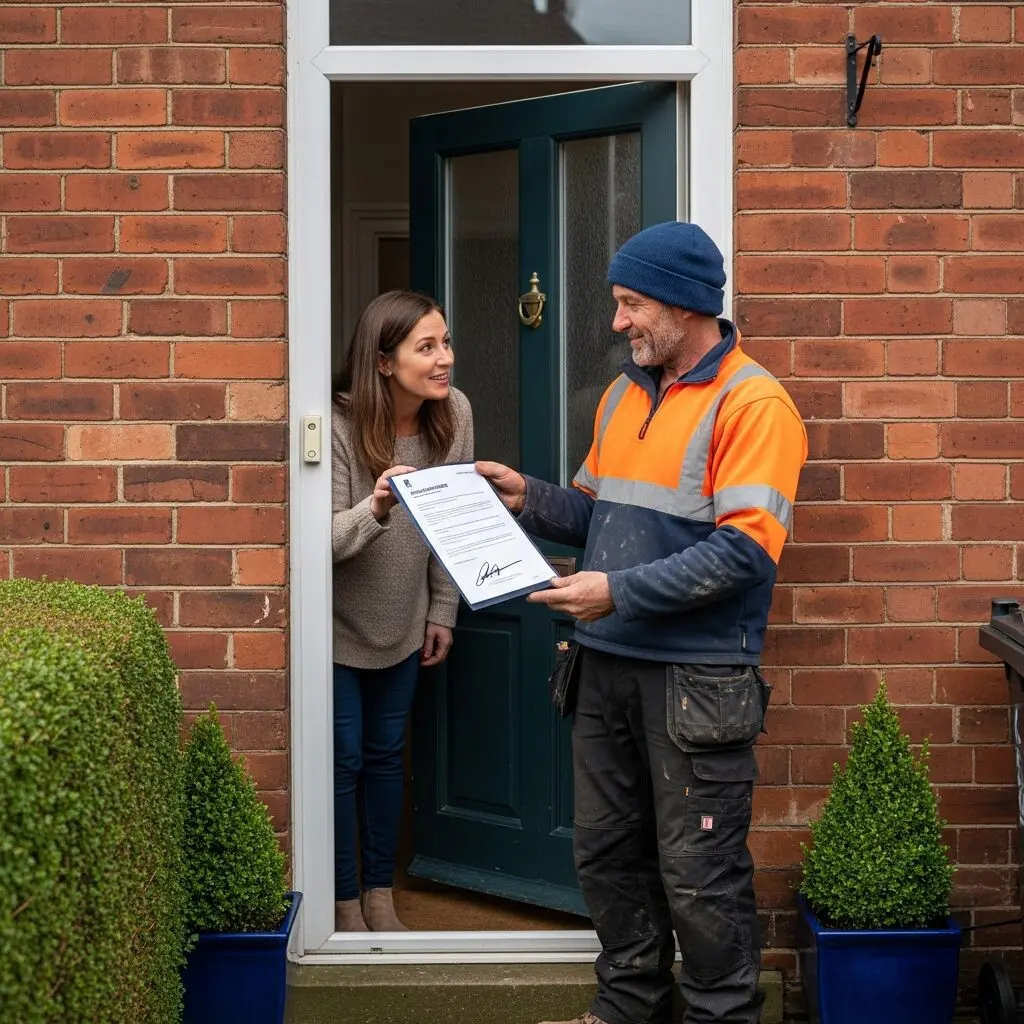
A workmanship guarantee is the roofer’s personal commitment that the installation was done correctly. If a fault develops due to poor installation — a badly flashed chimney, an incorrectly bedded ridge tile, or a flat roof membrane not properly sealed at the edges — this is what covers the cost of putting it right.
In practice, you should expect:
- Minimum 10 years on a standard tile or slate re-roof.
- 15–20 years from well-established contractors with a strong local track record.
- 5–10 years on flat roof systems (EPDM, GRP or felt), depending on the material and installer.
Always check what the guarantee excludes. Most workmanship guarantees don’t cover storm damage, falling branches, or modifications made to the roof by the owner. If the guarantee document isn’t clear, ask for clarification in writing before signing.
Before committing to any contractor, it’s worth reading our guide on choosing the right roofing company in Sheffield — the pre-hire checklist covers guarantees alongside other key questions.
Manufacturer Material Warranties
Separate from the roofer’s workmanship guarantee, most major tile, slate, and membrane manufacturers provide their own product warranties. These cover defects in the material itself — not the installation.
Typical warranty periods by material:
- Concrete and clay roof tiles: 30–40 years (some premium brands offer 50+)
- Natural slate: 75–100 years is common for quality Welsh or Spanish slate
- EPDM rubber flat roof membrane: 20–50 years depending on manufacturer
- GRP fibreglass flat roofing: 25–30 years from most manufacturers
- Felt flat roofing: 10–15 years (shorter warranty reflects shorter lifespan)
Your roofer should hand over manufacturer warranty documentation as part of the finished job. If they can’t provide it, that’s a warning sign — a quality contractor sources materials from reputable manufacturers and keeps the paperwork for exactly this reason.
Insurance-Backed Guarantees (IBGs): Why They Matter
This is the layer of protection most homeowners don’t know to ask for — and the one that matters most on larger jobs.
An IBG is underwritten by a third-party insurer, completely independent of the roofing company. If your contractor goes out of business during the guarantee period, the IBG insurer arranges and funds a registered contractor to carry out any covered remedial work. According to the National Federation of Roofing Contractors (NFRC), IBGs are automatically issued for roof refurbishment work up to £50,000 by contractors registered on their Competent Person Scheme.
- Duration: 10 years from completion of the work
- Cost: Around £45 — minimal expense for significant peace of mind
- Fully transferable: If you sell the property within the 10 years, the IBG passes to the new owner
- Issued after: Works are paid in full
- Not applicable to: Repairs, paints, or resins — structural roofing work only
Are Roofing Guarantees Transferable When You Sell?
Yes — and this is an underrated benefit when it comes to selling your home.
An IBG is fully transferable to the new owner. If you had your roof replaced three years before selling, the buyer inherits the remaining seven years of IBG protection. For buyers comparing otherwise similar properties, a documented and transferable roofing guarantee is a genuine selling point.
Workmanship guarantees and manufacturer warranties may also be transferable depending on their specific terms — always check the documents and get confirmation in writing at the start of the job, not after completion.
Six Questions to Ask Before Signing
Whether you’re commissioning a minor repair or a full roof repair and replacement, get clear written answers to these before any work starts:
- What workmanship guarantee do you provide, and what exactly does it cover?
- What is excluded from the guarantee?
- Which manufacturer is supplying the tiles, slate, or membrane — and what’s their warranty period?
- Are you registered with the NFRC Competent Person Scheme, and will I receive an IBG?
- Is the guarantee and IBG transferable if I sell the property?
- Do I receive all documentation at or before final payment?
A reputable Sheffield roofer will have confident, clear answers to all of these. Vague responses — particularly around IBGs or written documentation — are a red flag worth taking seriously.
Get a free quote
FAQ: Roof Guarantees and Warranties in Sheffield
How long should a new roof be guaranteed for?
At minimum, expect a 10-year workmanship guarantee from the roofer, plus a manufacturer’s material warranty of 20–40 years depending on the product. Well-established contractors often provide 15–20 year workmanship guarantees. Always get the terms in writing before work starts.
What is an insurance-backed guarantee (IBG) for roofing?
An IBG is third-party insurance that protects you if your roofing contractor goes out of business during the guarantee period. The insurer arranges and funds remedial work by a registered contractor. NFRC-registered contractors can issue IBGs for jobs up to £50,000.
Is a roofing guarantee transferable to a new homeowner?
Yes — insurance-backed guarantees are fully transferable when you sell your property. The new owner inherits the remaining guarantee period, which can be a genuine selling point. Check whether the workmanship guarantee and material warranty are also transferable under their specific terms.
Does a roof guarantee cover leaks?
A workmanship guarantee covers leaks caused by faults in installation. It does not typically cover storm damage, falling objects, or owner modifications. Material warranties cover manufacturing defects, not installation errors. Read both documents carefully before and after your roof is completed.