
Fascia and Soffit Repair or Replacement? How to Tell Which One Your Sheffield Home Needs
Roofline guide | Sheffield & South Yorkshire | Published 20 October 2026 | Updated 20 October 2026
Quick answer
Fascia and soffit repair makes sense when the damage is localised and the timber behind is still sound — one rotten section, a failed joint, a sagging gutter bracket. Once rot has travelled along the board or reached the rafter feet, repair stops being economical. Capping uPVC over rotten timber hides the problem rather than fixing it.
The most expensive roofline job we get called to is not a full replacement. It is the one where somebody capped shiny white uPVC straight over wet, rotten timber five years ago, and the rot has been quietly working its way into the rafter ends ever since.
That is the choice this guide is really about. Not “repair or replace” as an abstract question, but which of the two you are actually being sold — because “we can just cap over it” is offered far more often than it should be.
Below: what your roofline is doing up there, when a repair is genuinely the right call, when it is not, and the ventilation issue that almost nobody mentions in a quote.
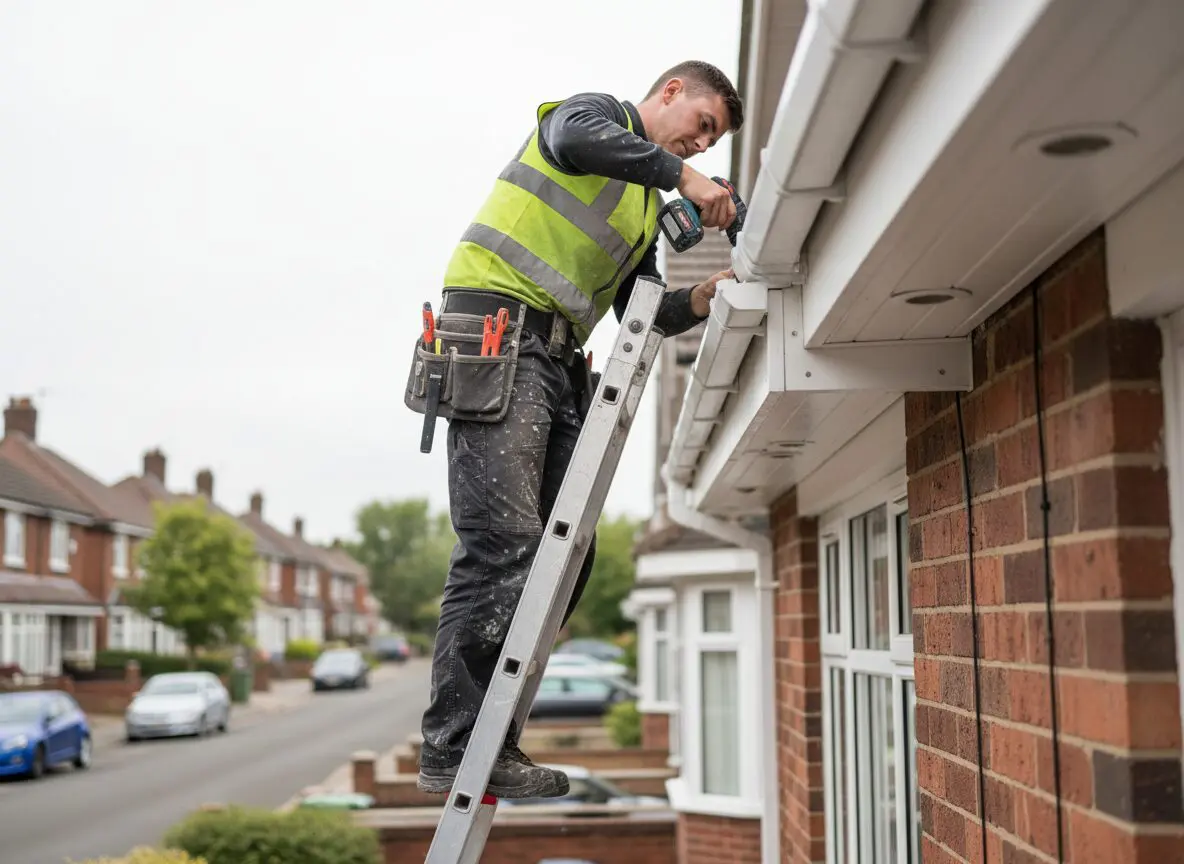
What Fascias and Soffits Actually Do
Roofline gets treated as trim. It is not. Three jobs are riding on those boards:
- They carry the gutter. Every bracket is screwed into the fascia. A soft fascia means a gutter that sags, holds water, overflows and eventually pulls away.
- They close the roof. The soffit seals the underside of the eaves against birds, wasps, squirrels and driving rain, and stops wind getting under the covering.
- They carry the ventilation. On most pitched roofs, the air that keeps the loft dry enters at the eaves — through vented soffit boards or a continuous vent strip.
That third one is the one people get wrong, and it is why a cosmetic roofline job can cause a condensation problem indoors. Ventilation of buildings in England is governed by Part F of the Building Regulations, published as Approved Document F on GOV.UK, and moisture control in the building fabric sits under BS 5250:2021, Management of moisture in buildings, one of the standards listed by the National Federation of Roofing Contractors. Board the eaves up solid and you have taken away the loft’s air supply.
When Fascia and Soffit Repair Is the Right Call
Repair is a perfectly good answer more often than the replacement quotes suggest. It is the right call when:
- One section has failed, not the run. A single rotten metre where a gutter joint has been dripping for years, with sound timber either side.
- The damage is impact, not decay. A ladder has punched through a soffit panel, or a branch has split a board.
- The real fault is the gutter. Very often the boards are fine and the gutter is the problem — a dropped bracket, a split joint, or a run that has lost its fall.
- Timber boards just need maintenance. Sound painted timber that is flaking needs preparing and repainting, not ripping off.
- You are staging the work. Doing the worst elevation now and the rest when budget allows is a sensible plan, not a fudge.
A competent repair on timber usually means cutting the failed section back to sound wood, splicing in new treated timber, refixing properly and making the gutter above watertight so it does not happen again. On uPVC it usually means replacing the affected panel or board rather than the whole elevation.
Check the gutter first. If your fascia is rotting in one specific place, look directly above it. Nine times out of ten there is a leaking joint or a blocked outlet feeding water onto that exact spot. Fix the board without fixing the gutter and you will be back within a couple of years.
The Capping-Over Trap
Here is where we part company with a lot of roofline sales patter. “Capping” or “over-cladding” means screwing a thin uPVC board over the existing timber fascia rather than removing it. Done on genuinely sound, dry timber with the ventilation kept open, it is a legitimate method.
Done on wet or rotten timber, it is a cover-up. The rot does not stop because it cannot be seen. It carries on in a sealed, unventilated pocket, and it spreads inwards towards the rafter feet — which are structural and expensive.
Three questions worth asking anyone quoting to cap:
- What condition is the timber underneath in, and how do you know? If nobody has lifted a section to look, nobody knows.
- Are you fitting vented soffits or a vent strip? If the existing eaves ventilation is being covered, something has to replace it.
- Does the roofing underlay carry into the gutter? If it stops short, water runs onto the top of the fascia. Cap over that and you have sealed a leak inside a new board.
Full replacement is not automatically the honest option either — it is just the more thorough one. What matters is that the decision follows an inspection of the timber, rather than the price of the quote.
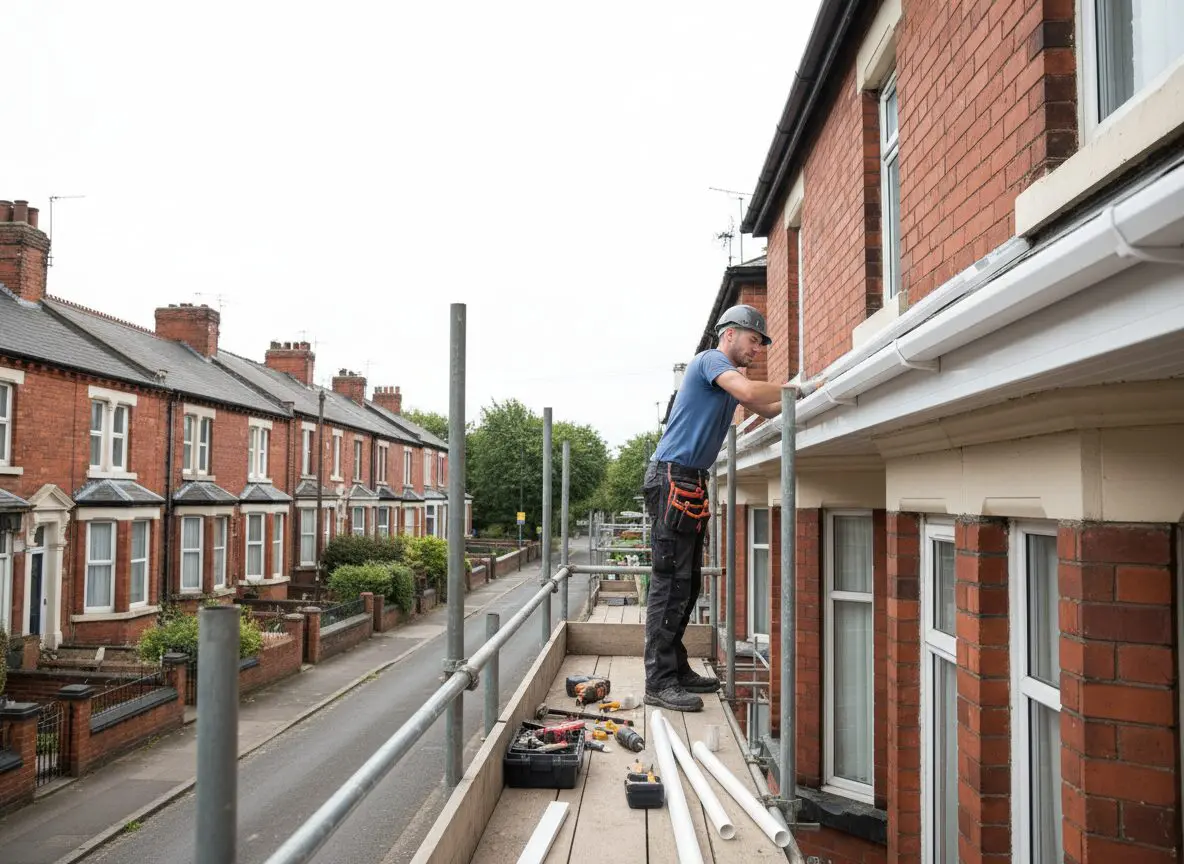
When Replacement Is the Cheaper Answer
Counter-intuitively, replacement often costs less over ten years. Consider it seriously when:
- Rot appears in more than one place along the run. Multiple failures mean the boards have reached the end of their life, not had bad luck.
- The rafter ends are soft. Push a screwdriver into the timber at the eaves. If it sinks in, the problem is past the fascia.
- The scaffold is going up anyway. If you are having gutters, a re-roof or chimney work done, doing the roofline at the same time removes a whole access cost from a future job.
- The gutters are being replaced too. New gutters on tired fascias is money spent twice.
- You want to stop painting it. This is a legitimate reason, provided the timber underneath is dealt with rather than buried.
If you are not sure which camp you are in, our guide to the warning signs that roofline boards have reached the end is a good self-check from ground level, and we set out current fascia and soffit replacement costs for Sheffield separately.
The Ventilation Point Nobody Mentions
Sheffield has a lot of solid-walled Victorian and inter-war housing that has since been insulated, double glazed and draught-proofed. All good things — but they mean more moisture stays inside the building, and more of it ends up in the loft.
A cold loft copes with that by being ventilated. Air comes in at the eaves, moves through the void, and takes the moisture with it. Block the eaves and the moisture has nowhere to go, so it condenses on the cold underside of the roof instead. You get damp insulation, black mould on the rafters, and drips that look exactly like a roof leak but appear on cold mornings rather than during rain.
We see this most often after roofline work, loft insulation top-ups, or both. If that description sounds familiar, our guide to loft condensation and roof ventilation problems walks through how to tell condensation from a genuine leak.
What About Doing It Yourself?
Painting sound timber from a safely footed ladder on a bungalow is a reasonable weekend job. Anything at eaves height on a two or three-storey Sheffield terrace is not, and the reason is specific: roofline work puts you at the very edge of the building, reaching outwards, with nothing solid to hold.
A plastic gutter or fascia will not support a ladder, and leaning on one is how people fall. The Health and Safety Executive publishes practical guidance on working at height and the safe use of ladders and stepladders that is worth ten minutes before you start.
There is also a diagnosis problem. From a ladder you can see the face of the board. You cannot see the top edge, where the water actually gets in, or the rafter feet behind it.
How We Assess a Roofline
When we look at fascias and soffits in Sheffield, the assessment runs in this order:
- Check the gutter line for falls, standing water, splits and dropped brackets.
- Probe the fascia at the joints and behind the brackets, where rot always starts.
- Look at the top edge of the fascia and whether the underlay drains into the gutter.
- Check the soffit for existing ventilation, and whether it is open or painted shut.
- Check the rafter feet for softness.
- Look inside the loft at the eaves for daylight, damp staining and airflow.
Only then is there an honest answer to repair or replace — and on plenty of houses the answer is “repair this elevation, replace that one”.
Not sure whether yours needs repairing or replacing?
AJR Roofing inspects rooflines free of charge across Sheffield and South Yorkshire, and we will tell you if a repair will do. Call 07852 940350 or send us a photo of the affected corner.
Frequently Asked Questions
Can fascias and soffits be repaired instead of replaced?
Yes, where the damage is localised and the surrounding timber is sound. A rotten section can be cut out and spliced, a damaged uPVC panel can be swapped, and a leaking gutter joint above it can be fixed. Repair becomes false economy once rot appears in several places along the same run.
Can you cap uPVC over wooden fascias?
Only if the timber underneath is dry and sound, and the eaves ventilation is maintained or replaced. Capping over rotten timber seals the decay in rather than stopping it, and it can spread to the rafter ends, which is a far more expensive repair.
How much does soffit repair cost?
Far less than a full roofline replacement, but it depends heavily on access — a bungalow soffit panel is a different job to the same panel three storeys up on a terrace. Where scaffolding is needed for a small repair, it is usually worth pricing the full run at the same time.
Do soffits need to be vented?
On a cold pitched roof, the eaves are normally where ventilation air enters the loft. If your existing soffits are vented, any replacement or capping needs to keep that ventilation open, whether through vented boards or a continuous vent strip.
How long do uPVC fascias and soffits last?
Good-quality uPVC roofline is a long-life product and generally outlasts painted timber comfortably, provided it is fitted to sound timber and fixed properly. What usually fails first is not the plastic — it is whatever was left underneath it.
Can you replace the soffit without the fascia?
Sometimes, but they are usually fitted as a system and the fascia is what holds the outer edge of the soffit. If the fascia is being disturbed to get the soffit out, doing both is often the more sensible use of the access.
Does replacing fascias and soffits need planning permission?
Like-for-like roofline replacement is normally treated as maintenance on an ordinary house. Listed buildings and properties in conservation areas are the exception, and changing materials or appearance is where restrictions bite — worth checking with the council first.
Talk to a local roofer, not a call centre.
AJR Roofing covers Sheffield and the wider South Yorkshire area. Call 07852 940350, email photos to ajrroofing17@gmail.com, or use our contact form for a free, no-obligation quote.
About the author: Reviewed and signed off by AJR Roofing— fully insured roofers working across Sheffield and South Yorkshire, with 25+ years on local roofs, gutters and rooflines.